Circular economy and life cycle thinking
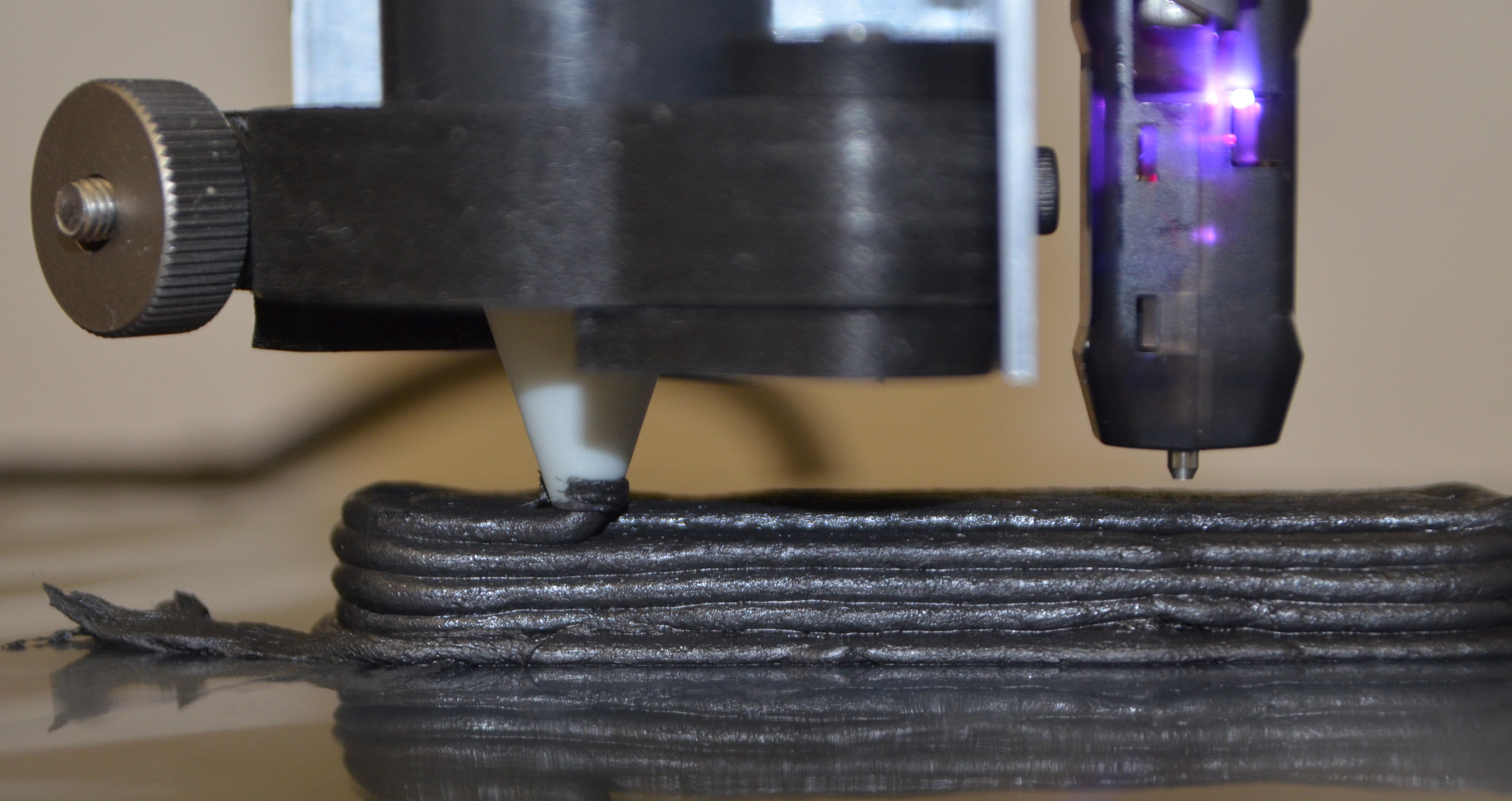
Within the framework of the circular economy and life cycle thinking, the extent to which industrial by-products such as EDM sludge from tool and mould making or paper fibre dust from cardboard production can be used as solid waste is being investigated, the extent to which industrial by-products such as EDM sludge from tool and mould making, wood flour or paper fibre dust from cardboard production can be used as alternative raw material sources for the additive manufacturing of components.
Essential work packages include detailed material characterisation and targeted processing for the production of functional, printable materials, for example through drying, chemical analysis, sieving and classification. By combining this with state-of-the-art AF technologies such as multi-ink binder jetting (BJT), directed energy deposition (DED-LB/M) and large-volume material extrusion (MEX-CRB), efficient, functional utilisation of the specific properties of the materials can be achieved. In addition, a systematic evaluation of the material substitution effects is carried out with a focus on waste reduction, raw material efficiency and minimisation of the ecological footprint.
Sustainable materials: Additive manufacturing with renewable, bio-based materials
The development of biobased materials for additive manufacturing makes an important contribution to the circular economy and to reducing dependence on fossil resources. The research focuses on printable pastes, filaments and powders made from renewable raw materials such as lignin and cellulose, as well as agricultural and industrial residues such as miscanthus fibres, wood shavings and walnut shells. Their rheological and mechanical properties are being investigated with regard to their suitability for specific AM process chains such as material extrusion (MEX) and binder jetting (BJT), as well as targeted material modifications - such as chemical functionalisation or fibre reinforcements - to improve processability, stability and long-term resistance. The focus is also shifting to environmentally relevant aspects, including biodegradability, ecological footprint during processing and the substitution potential compared to petrochemical-based material systems.
Metal powder recycling
The reprocessing of metallic waste (residual powder), particularly in the context of powder-based laser melting processes (DED-LB/M), plays a central role in resource efficiency and the reduction of material costs. The focus is on the recyclability and requalification of used powder fractions, taking into account particle morphology, flow behaviour and chemical stability with regard to their oxygen and hydrogen content. In addition, the influence of different recyclate proportions (material composition, particle condition and distribution) on process stability, layer formation and the resulting component properties is being investigated. In addition, the development of energy- and process-efficient regeneration methods, including screening as well as chemical and thermal treatments, is taking centre stage.