Dynamic flowsheet simulation programme for crushing and screening circuits in the quarrying industry
The aim of the BreSiSim project is to develop software for dynamic flowsheet simulation, specifically for use in quarries, and to establish it on the market as an industry solution. In collaboration with the start-up DyssolTEC, the IART will have the opportunity to transfer its decades of expertise in crushing and classification processes into industrial applications.
Term:
01.01.2025 to 30.06.2027
| Alliance partner | Contact person |
|
|
Motivation and project goals
Shredding processes consume around 4% of the electrical energy generated worldwide. Increasing process efficiency is therefore of great importance. This can be achieved, among other things, by integrating a dynamic flow diagram simulation into the system design and control. In this way, temporal fluctuations in raw material properties, machine and system parameters that adversely affect the efficiency of treatment processes can be taken into account. This is a considerable advantage compared to the process design currently used in the processing of primary raw materials, which assumes stationary operating conditions at a certain point in time, e.g. when reopening an open-cast mine. The Dyssol programme from DyssolTEC allows such a simulation of dynamic process engineering processes in principle, but does not contain any models for crushing/screening circuits. The relevant expertise of the IART from years of research in processing technology is to be bundled and applied in order to close this gap.
Tasks of the IART
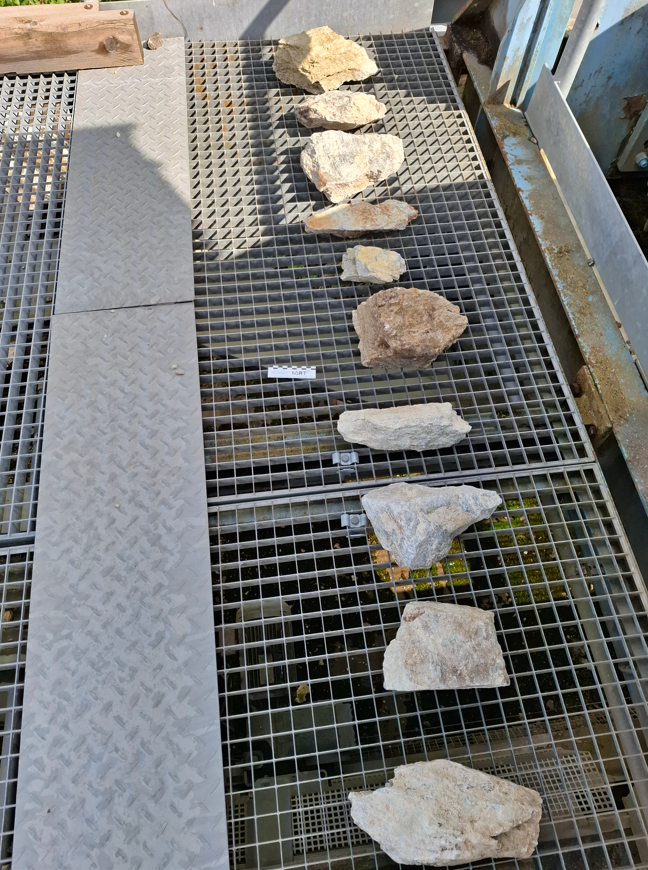
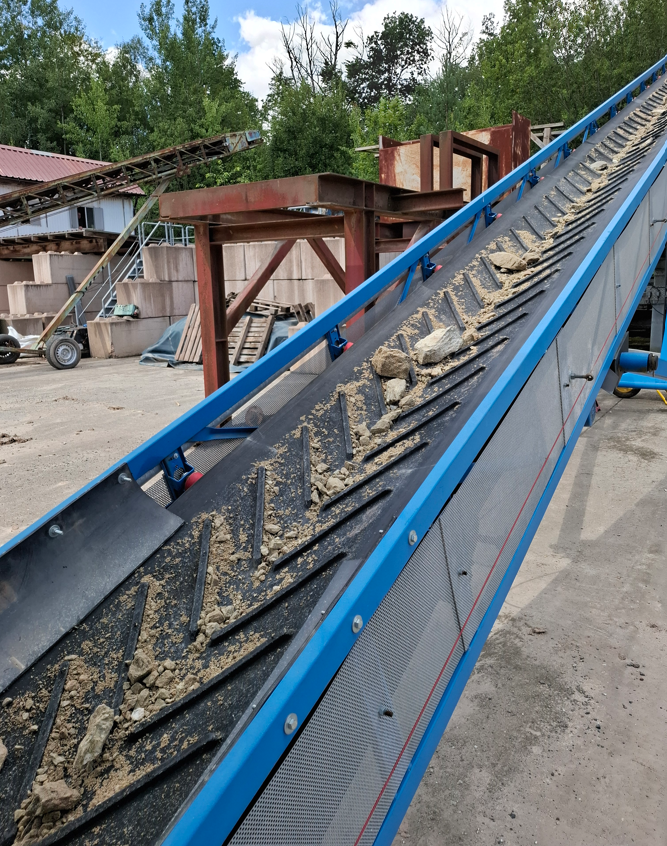
While DyssolTEC is responsible for software development, i.e. model implementation and calculation, the IART deals with the modelling of specific process steps and processing machines. This includes material extraction, crushing using primary and secondary crushers, classification using screening machines as well as storage and conveying technology. Input and output variables are initially defined based on previous work at the institute. Furthermore, tests for model calibration and validation will be carried out in the IART's technical centre or in the Breitenau quarry.
Optional funding note
This cooperation project is funded by the Central Innovation Programme for SMEs (ZIM) of the Federal Ministry for Economic Affairs and Energy.