Sustainable Electric Architecture Casings
Term:
01 December 2021 to 31 August 2025
| Collaboration partners | Contact partners |
|
Motivation and project goals
The electrification of the powertrain opens up new possibilities for the design of vehicles and components. While mechanical and thermal loads on electric vehicles are decreasing, requirements for electromagnetic compatibility, lightweight construction and acoustics are increasing. At the same time, there is growing pressure to reduce the carbon footprint and promote a circular economy without compromising reliability.
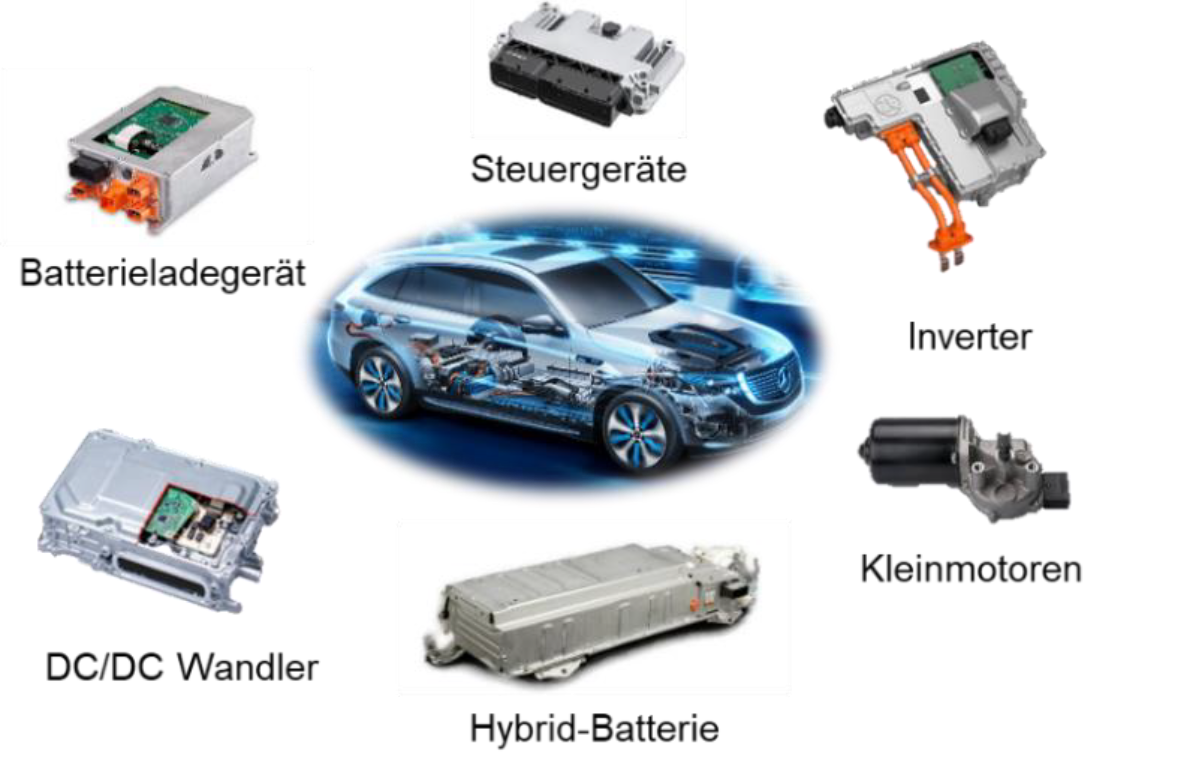
The EAC+ project is developing sustainable, recyclable and economical housing structures that fulfil the high requirements of electromobility and can be used in various industries. The focus is on the housing of the traction inverter, with a planned transfer to DC/DC converters, chargers and battery housings.
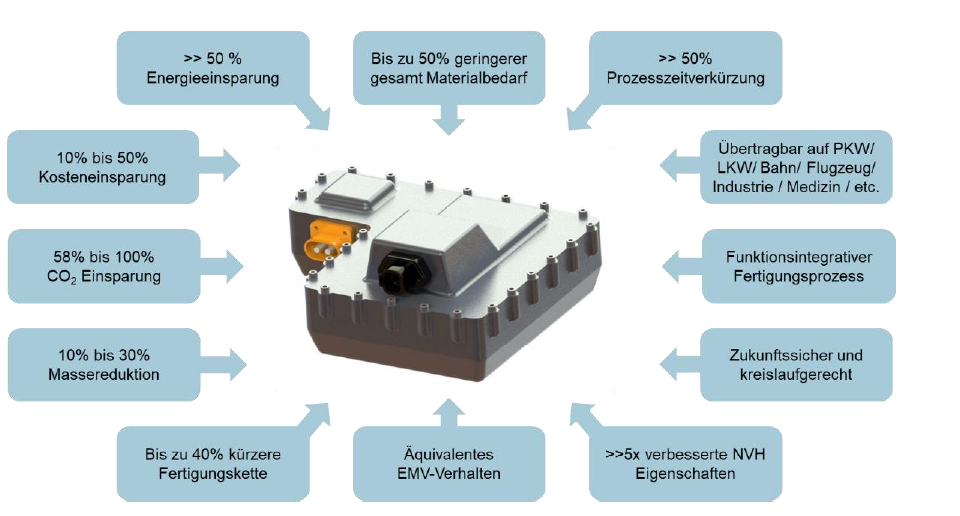
The core innovation is a hybrid injection moulding process that combines injection moulding and metal forming. This results in lighter, more cost-effective and recyclable products with fewer production steps and less assembly work. This reduces energy and material consumption and improves the acoustic properties.
Through collaboration along the entire value chain - from material manufacturers to recyclers - the project results are put directly into practice, with broad benefits for the industry in Germany.
Tasks of the IART
The Institute has the task of considering the recyclability of products as early as the concept phase and emphasising its importance. The aim is to develop recyclable product designs that fulfil functional, economic and ecological framework conditions ("design by recycling"). Recycling concepts in accordance with DIN 2243 and relevant legal requirements such as the Ecodesign Directive 2009/125/EC must be integrated. New product concepts are to be evaluated in terms of their recyclability and their material flows are to be planned into high-quality recycling routes with reuse. To this end, tests are carried out with new structures, their recyclability and target parameters are evaluated and the results are fed back into the concept phase. In addition, a digital image of the process-related material flows is created, which provides balance sheet parameters and evaluation key figures for decision-making.
Optional funding information
The "EAC+" project is funded by the Federal Ministry for Economic Affairs and Climate Protection (BMWK) as part of the Lightweight Construction Technology Transfer Programme until 2025 funding measure and is supervised by Project Management Jülich.