Series: ‘What does democracy mean (to us)?’
Under the title ‘What does democracy mean (to us)?’ , a new series of events was launched in the 2024/2025 winter semester, organised by the TU Bergakademie Freiberg in collaboration with Studium Generale, the Freiberg für Alle network, the DGB Südwestsachsen and the Akademische Buchhandlung. Through a series of lectures, the programme provides a space for reflection, exchange and discussion. It is aimed at students, university staff and interested members of the public. The focus is on issues of social discourse. To this end, we invite speakers who present a variety of local, regional, national and international perspectives in the form of lectures or talks.
The focus is on exploring the concept of democracy and its significance in today’s society. The aim is not only to examine historical and political perspectives, but also to discuss the challenges and opportunities for democracy in the 21st century.
Organisers:
The event series ‘What does democracy mean (to us)?’ is a joint project between the University, the Studium Generale, ‘Freiberg für Alle’ and the DGB.
Upcoming Events

September 16, 7:00 p.m., Krüger Lecture Hall, SPQ
Why Protect Democracy?
with Stephan J. Kramer, President of the Thuringian State Office for the Protection of the Constitution
In cooperation with the Mittelsachsen Adult Education Center and the Saxon State Agency for Political Education
as part of the “Kontrovers vor Ort” series
Our democracy thrives on dialogue—yet that dialogue is becoming harsher, louder, and often more irreconcilable. And this raises the question: What still holds our society together? Amid disinformation, polarization, and growing mistrust, our shared foundations are under pressure. It is at the local level that we decide how we treat one another—in everyday life, in volunteer work, and in our neighborhoods. What defines our democracy—and why is it worth protecting? How can we tolerate differing opinions without losing social cohesion? And what responsibility does each and every one of us bear for treating one another with respect? “Kontrovers vor Ort” creates space for open conversations, diverse perspectives, and new insights. For everyone who doesn’t just want to watch from the sidelines but wants to actively help shape our democracy.
Our guest, Stephan J. Kramer, born in 1968, earned his master’s degree in social pedagogy in Erfurt and has served there as president of the Office for the Protection of the Constitution of the Free State of Thuringia since 2015. Prior to that, from 1999 to 2014, he was executive director and later secretary general of the Central Council of Jews in Germany.
Kontrovers vor Ort
Sächsische Landeszentrale für politische Bildung
Volkshochschule Mittelsachsen
November 25, 6:00 p.m., Freiberg University Library
Red Lines: How the Federal Constitutional Court Protects Democracy
with Susanne Baer, former judge at the Federal Constitutional Court, and Prof. Robert Frau, TU Bergakademie Freiberg
What happens when the Federal Constitutional Court issues a ruling? Who sits on the court—and how do the debates unfold? In her book, Susanne Baer, former judge at the Federal Constitutional Court, describes how law and legislation are formed. Robert Frau, professor of public law at TU Bergakademie Freiberg, shares insights from his teaching and outreach work. Together, the two legal scholars discuss how conflicts can be resolved—and where the red lines drawn by the Basic Law lie.
In cooperation with the Saxon State Agency for Political Education
Registration link to follow
Sächsische landeszentrale für politische Bildung
A look back at past events


28 November 2024 ‘Freedom Shock’ | The series kicks off with Dr Ilko-Sascha Kowalczuk, one of the most sought-after historians specialising in East German history. In his lecture, he will link current issues relating to democracy with historical developments since the early 1990s. In particular, he will provide insights into the history of East Germany, which experienced the so-called “shock of freedom” in 1989/90. |
13 January 2025 “Committed and at Risk” Jun.-Prof. Dr Thomas Laux (Chemnitz University of Technology), Teresa Lindenauer (Dresden University of Technology) | Anyone committed to democracy in Saxony exposes themselves to particular risks. Those active in political education are also repeatedly targeted by right-wing actors. The study analyses the extent of the attacks on political education in Saxony, the context in which they take place, and how perceived threats |
29.01.2025 ‘Climate Bullshit Bingo’ Jan Hegenberg | ... known for his blog ‘Graslutscher’, debunks false claims in non-fiction books, on social media and on his blog – with plenty of humour and even more knowledge. Today, he runs the blog full-time, publishing scientifically sound and highly entertaining educational content as well as media criticism on topics such as the food, energy and transport transitions. In his second book, “Climate Bullshit Bingo!”, he provides a sort of guide to debating. Electric cars don’t have enough range, it still gets cold in winter and the Chinese do whatever they want anyway: Jan Hegenberg is familiar with the spurious arguments against climate protection – and knows how to refute them. |
13 February 2025 “How X, TikTok, YouTube and Instagram are destroying our democracy – and what urgently needs to be done now.” Petra Gerster and Christian Nürnberger | Never before have Western democracies been under such threat as they are today – from both outside and within. From the outside, alongside anti-democratic Islamists and terrorists, dictatorial heads of state such as Putin, Xi, Ali Khamenei and Kim Jong-un are attacking democratic countries; from within, the threat comes from right-wing populist and far-right parties. |
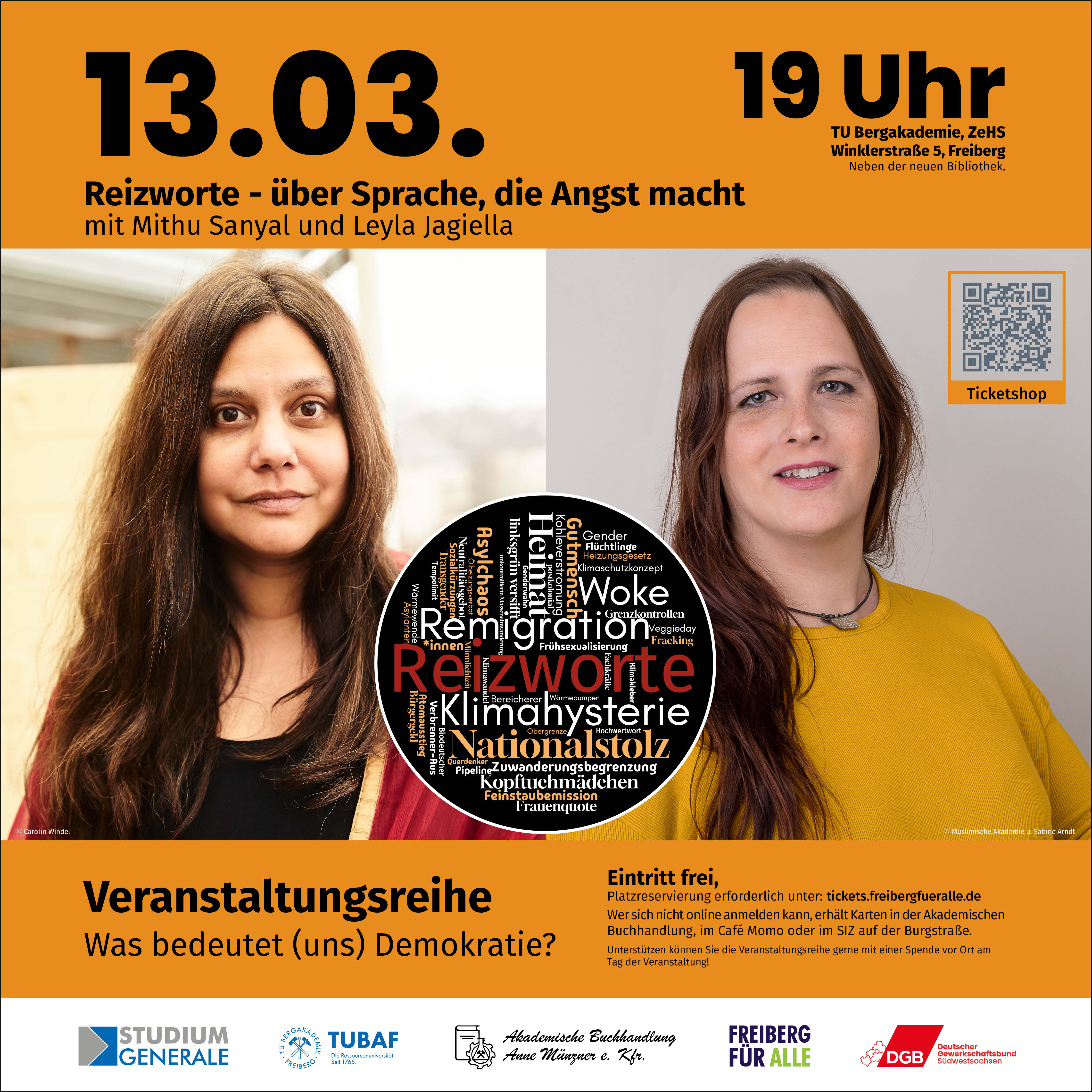
13.03.2025 “Provocative words – on language that instils fear” Mithu Sanyal and Leyla Jagiella | We live in times that are as exciting as they are turbulent. Political debates have become more heated, as have many conversations at home around the kitchen table. Much of this revolves around terms, phrasing, asterisks, identities and labels. The actual lived realities of people’s lives are often obscured by this. In many quarters, fear is being stoked without, however, addressing the real fears and concerns that trouble many people. Problems take centre stage, whilst genuine solutions are trivialised. In this climate of anxiety, a single word is often enough to trigger a reaction in people without them even asking themselves why. ‘Woke’, ‘postcolonial’, ‘left-wing green slob’, ‘*innen’, ‘do-gooder’, ‘homeland’, ‘gender’… and already emotions are running high on all sides. |
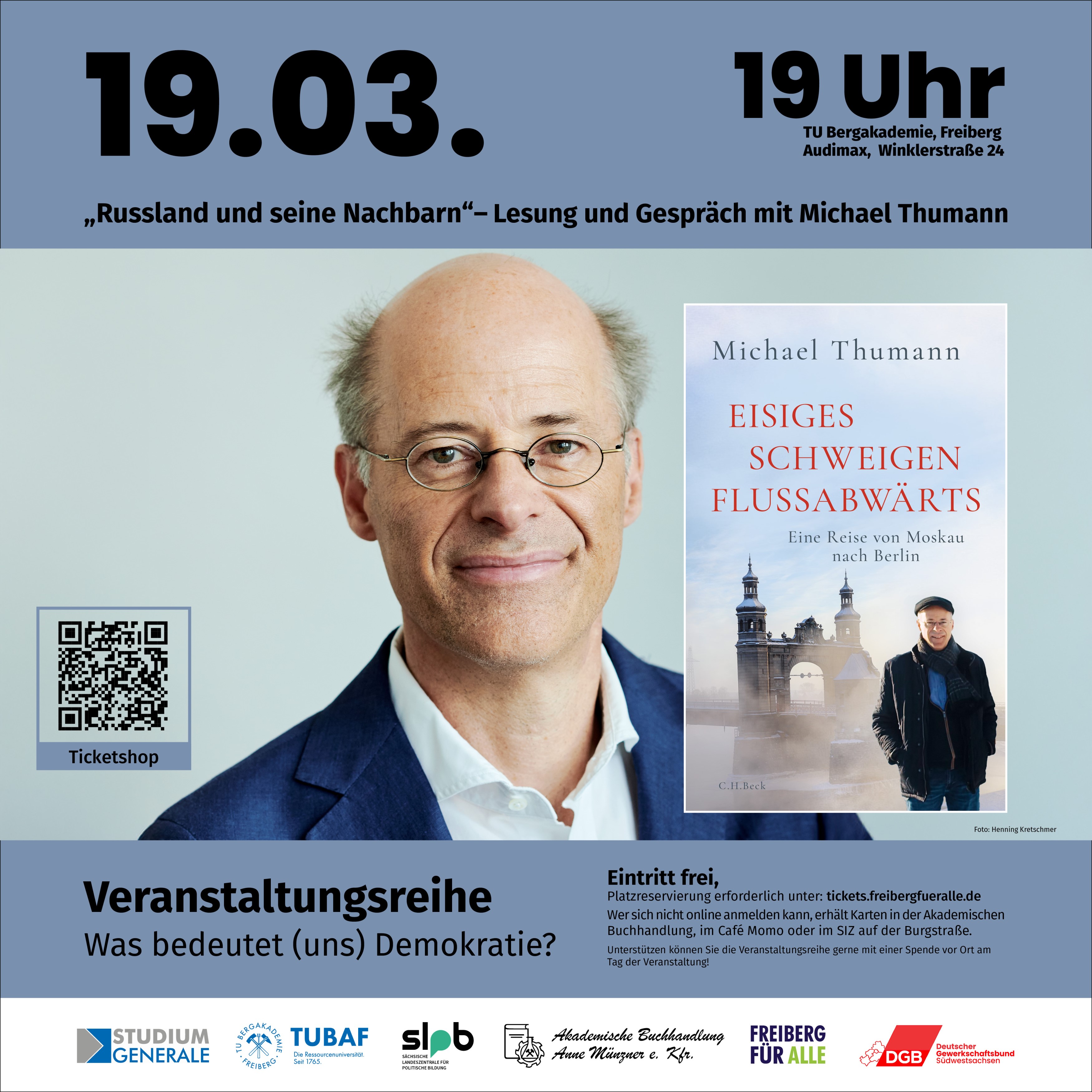
19 March 2025 “Icy Silence Downstream. Russia and its neighbours” Michael Thumann | The reading and discussion with Michael Thumann about his book “Icy Silence Downstream” promises a fascinating insight into current geopolitical developments and the human stories behind them. In this book, Thumann, a renowned journalist and foreign policy expert, combines in-depth analysis with a literary narrative style that focuses on individual destinies. The book sheds light on the political and social tensions in Eastern Europe and Central Asia. |
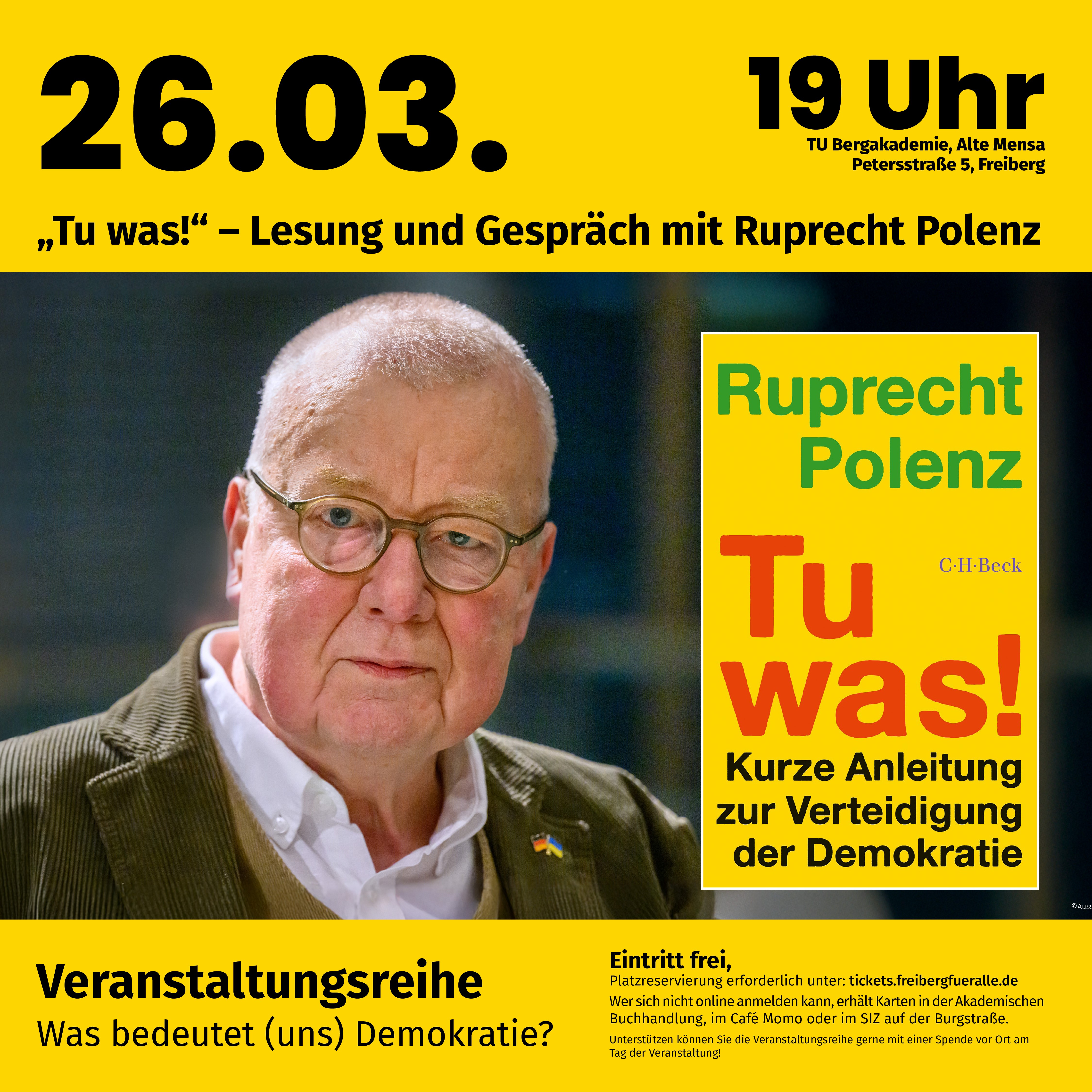
26 March 2025 “Do something!” Ruprecht Polenz
| Do something! That is the slogan of Ruprecht Polenz, a democracy influencer recognised across party lines. In his short piece, he conveys the value of our form of government and society in a completely new way and describes more than a dozen concrete ways to get politically involved. After all, the resilience of democracies begins, quite literally, with each and every one of us – and thus in our own homes. Polenz’s book is not merely a guide, but above all a source of encouragement in dark times. |
19 May 2025 Greenland – a pawn of the major powers? What is driving the ‘Land of the People’? Prof. Birgit Stöber
| Never before has Greenland been such a hot topic in the international media. What sort of country is it, and why do the USA, China and Russia have an interest in it? How are Denmark and the European Union positioning themselves in the dispute over rare earths, gas and oil, and ice-free trade routes? And above all: what do the people of Greenland themselves have to say about it? On 11 March, a new parliament was elected in Greenland, with the desire for independence once again being emphasised. Just under a month after this election, we want to focus on Greenland – or Kalaallit Nunaat (‘Land of the People’, as it is known in Greenlandic – and seek to understand and discuss its historical, political and cultural context. |
5 June 2025 News deserts? – Local journalism under pressure and the consequences for democracy. Academic findings and the perspective of journalistic practice Lutz Hagen, Thorsten Kleditzsch | In Germany, local journalism has a widespread and long-standing tradition. In both the new and the old federal states, it is still primarily the regional subscription newspapers that provide by far the largest share of information about local events. However, the digital revolution in the media landscape is making the newspaper industry in its current form increasingly unviable, and the younger demographic has turned away from local newspapers. Media concentration at the local level has been advancing at an ever more alarming rate for decades. Print editions are being discontinued, editorial teams merged, and local editions are being reoriented more towards regional coverage and topics with broad appeal and a larger readership. To put it another way: a recent development in Saxony is the takeover of the *Sächsische Zeitung* by the Lower Saxony-based Madsack Group |
29 October 2025 ‘Tasks of Freedom’. Marco Martin
| The speech by journalist and author Marko Martin, ‘On Germany’s enduring self-deceptions and repression – in East and West’, delivered on the occasion of the 35th anniversary of the fall of the Berlin Wall, sparked a major debate. On 13 September 2025, the award-winning author published the non-fiction book Freiheitsaufgaben, in which he outlines for the first time his vision of a responsible and uncomfortable freedom. The author questions our understanding of the concept of freedom. Does freedom automatically mean happiness? Or, in the view of the Franco-German social psychologist, writer and philosopher Manés Sperber, is freedom not above all ‘the categorical rejection of despondency’? Could it not be precisely from this understanding that something like happiness might arise? Marko Martin, influenced by advocates of freedom worldwide, recounts this like no other. |
5 February 2026 The New Wall – The East, the West and democracy under threat – A conversation with Bodo Ramelow & Ilko-Sascha Kowalczuk | A new wall runs through Germany. Much of what went wrong after 1990 can be explained by mistakes in the reunification process; other issues stem from false expectations. The result, after more than three decades, is a toxic atmosphere that is gripping ever-larger sections of the population – in the East as well as in the West. |
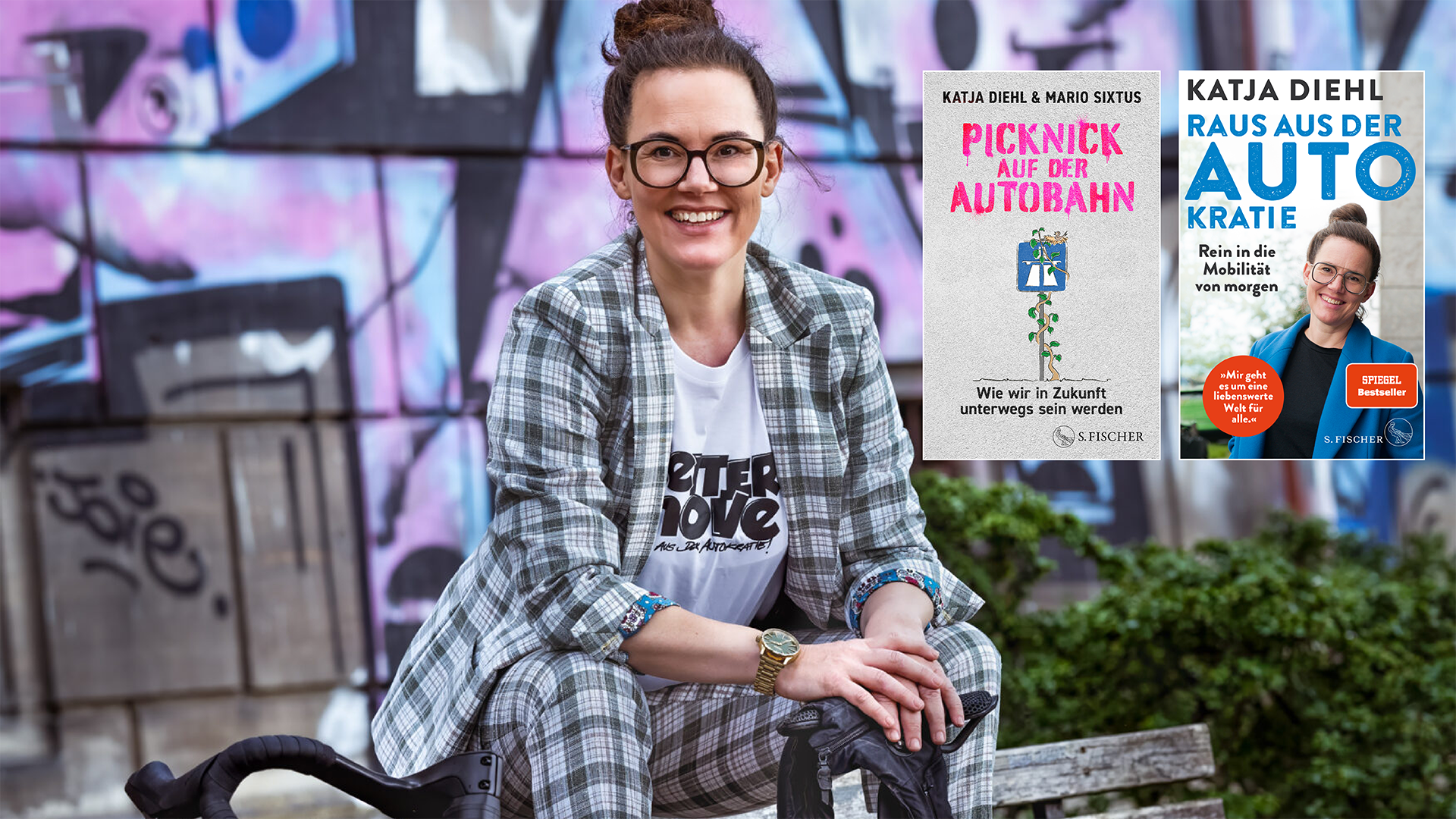
12 March 2026 Picnic on the motorway – ‘If only, if only, bike chain’? Not a chance! Mobility ideas that make you look forward to tomorrow. Prof. Bastian Pfleging – TU Bergakademie Freiberg Martin Seltmann – Councillor for Urban Development and Construction Katja Diehl – Mobility expert and author | How can we place people at the heart of mobility in both urban and rural areas, and how do we want to live in the future? Author and mobility expert Katja Diehl explores this question in a reading and discussion. Drawing on her books *Picnic on the Motorway* and *Come with Me into the World of Tomorrow!*, she outlines visions of a new future for mobility for both adults and children, whilst also presenting concrete ideas on how these can be put into practice. Look forward to surprising perspectives and vivid examples – an event for anyone curious about the transport transition and keen to see a more liveable future. |