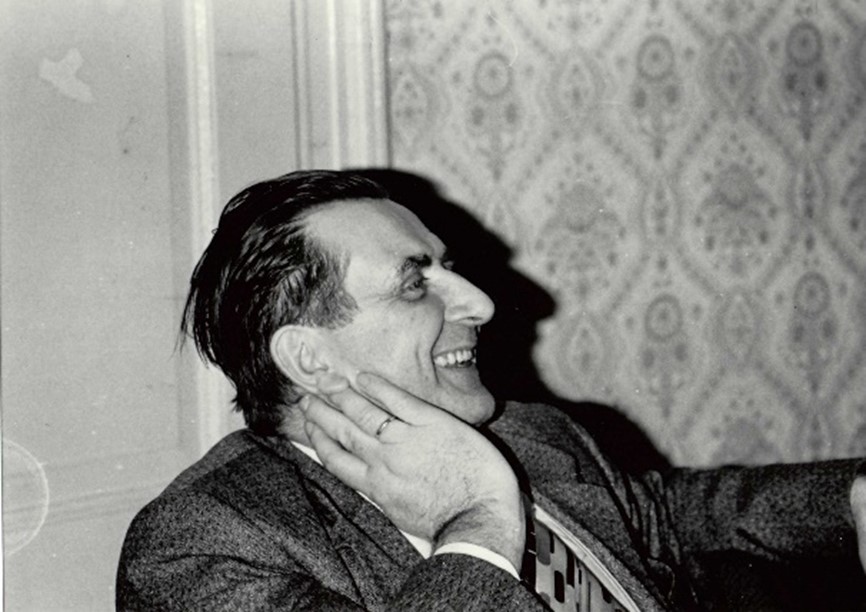
January 23rd 2026 marks the 100th anniversary of the birth of Prof. Dr. sc. techn. Drs. h.c. Heinrich Schubert. We take this occasion to remember his work in Freiberg and, above all, his contributions to the fields of mechanical process engineering and mineral processing.
Prof. Heinrich Schubert held the chair and served as head of the Institute of Mechanical Process Engineering and Mineral Processing from 1969 to 1991. During this period, he educated around 550 students and approximately 60 doctoral candidates. In addition, he became widely known far beyond Freiberg for his academic teaching, particularly through his various textbooks on mechanical process engineering and the processing of solid materials. For example, he was a visiting professor at the University of Queensland (Australia), the University of Iowa (USA), and the Iron and Steel University Wuhan (China).
Prof. Heinrich Schubert is internationally recognized and honored not only for his teaching but also for his research. His scientific publications are still widely cited today. Toward the end of his active career as a university professor, he succeeded, together with his research group and the university, in bringing the World Congress of Mineral Processing, the International Mineral Processing Congress (IMPC) 1991, to Dresden and organizing it very successfully. It is remarkable that he achieved all this despite the obstacles and restrictions that existed in the former GDR. Obtaining machines, equipment, or specialist literature from the West, as well as traveling to Western countries, was only possible with the approval of the political leadership and, in his case, due to his international recognition.
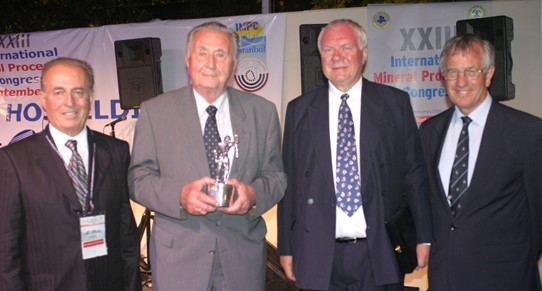
In honor of his life’s work, he was awarded the Lifetime Achievement Award by the International Mineral Processing Council in 2006. This distinction particularly underscores the significance of his contributions to mineral processing. On the occasion of his 90th birthday, a special issue of the International Journal of Mineral Processing was published, containing contributions from 56 colleagues, former students, and their students from around the world.
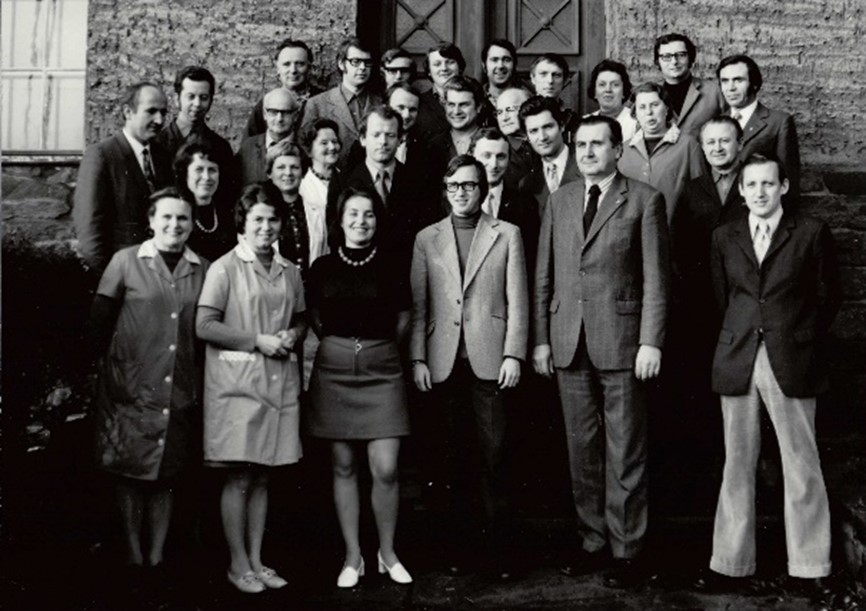
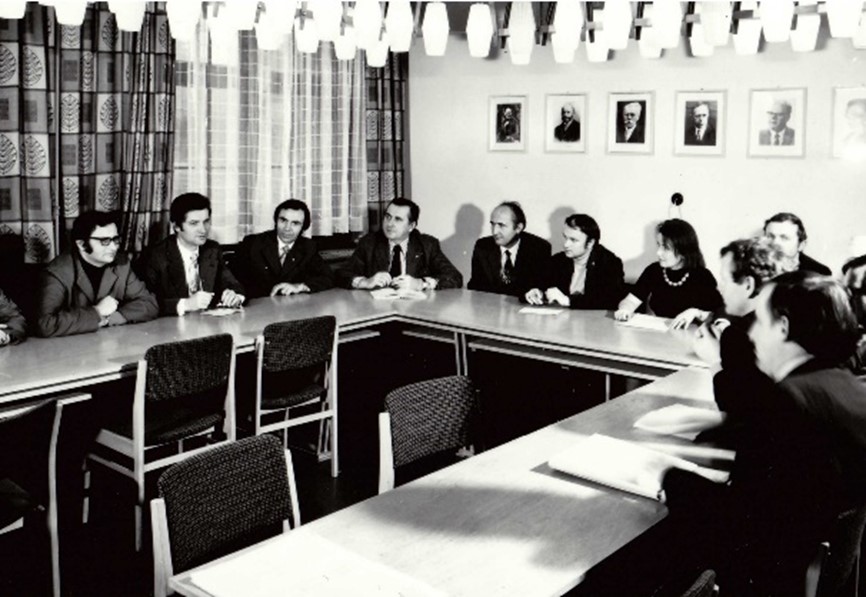
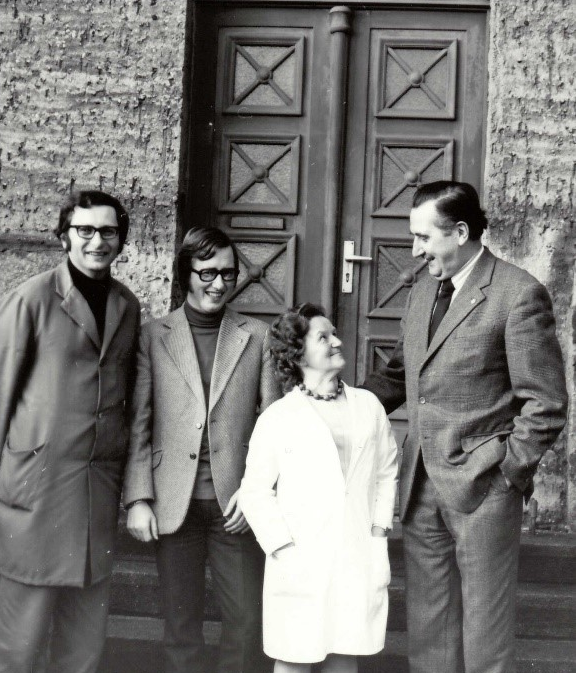
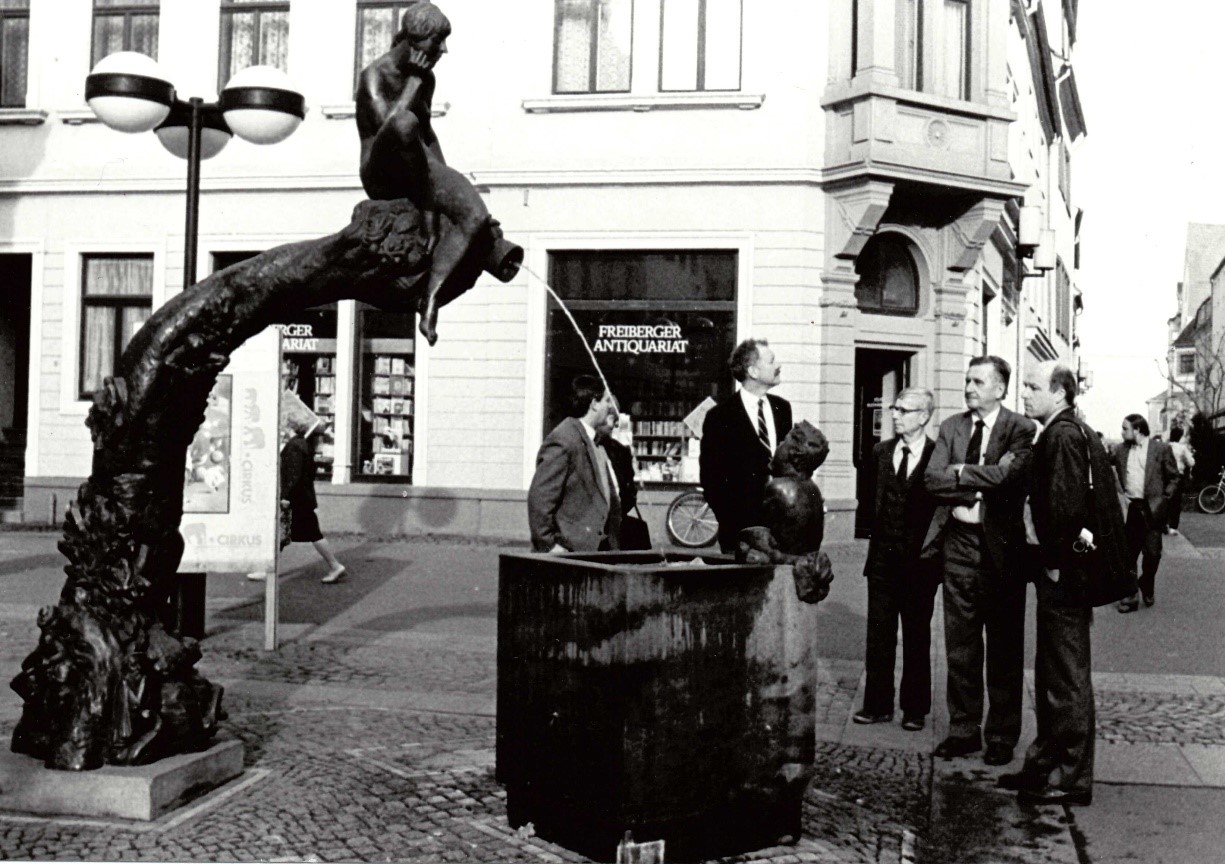
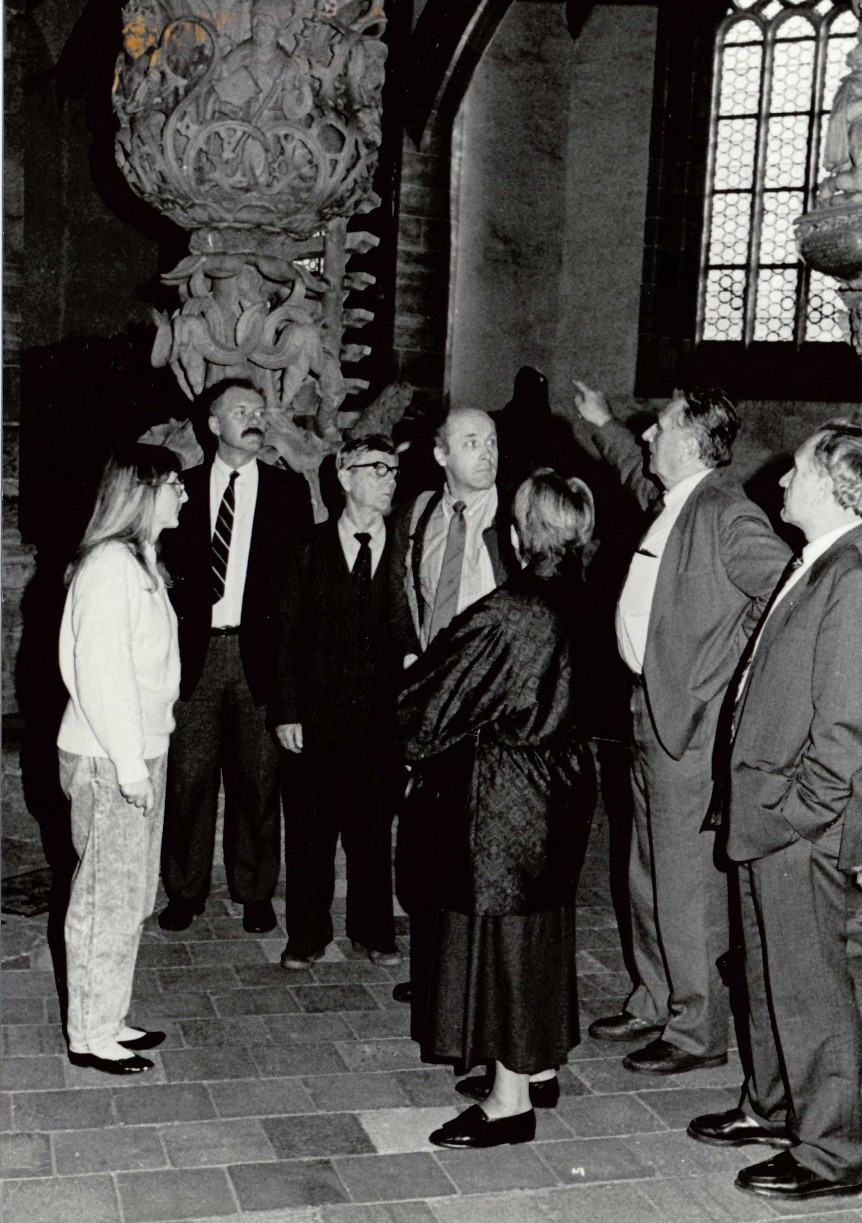
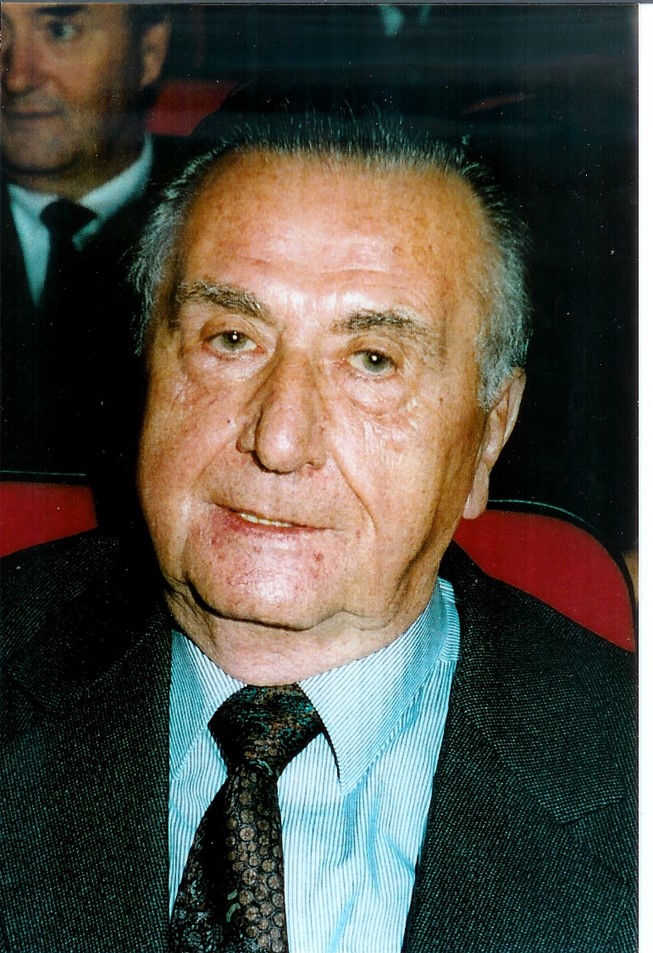
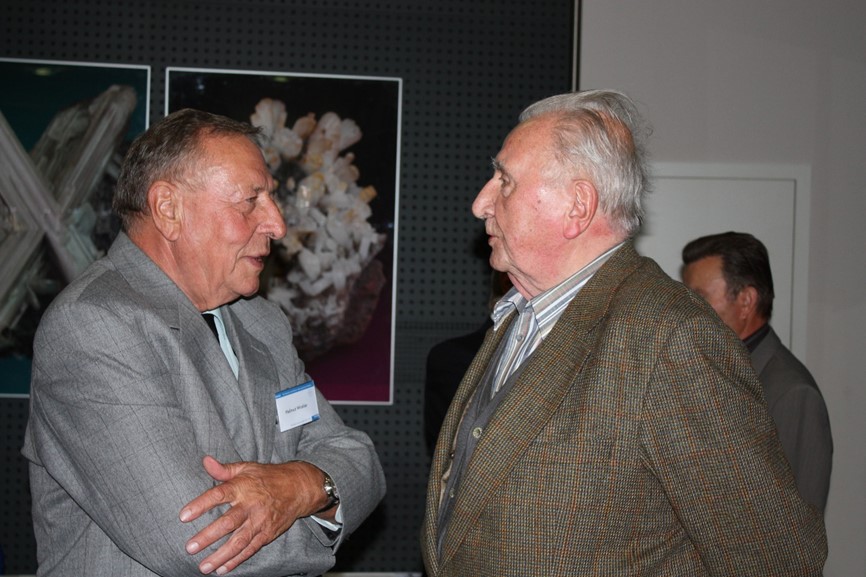
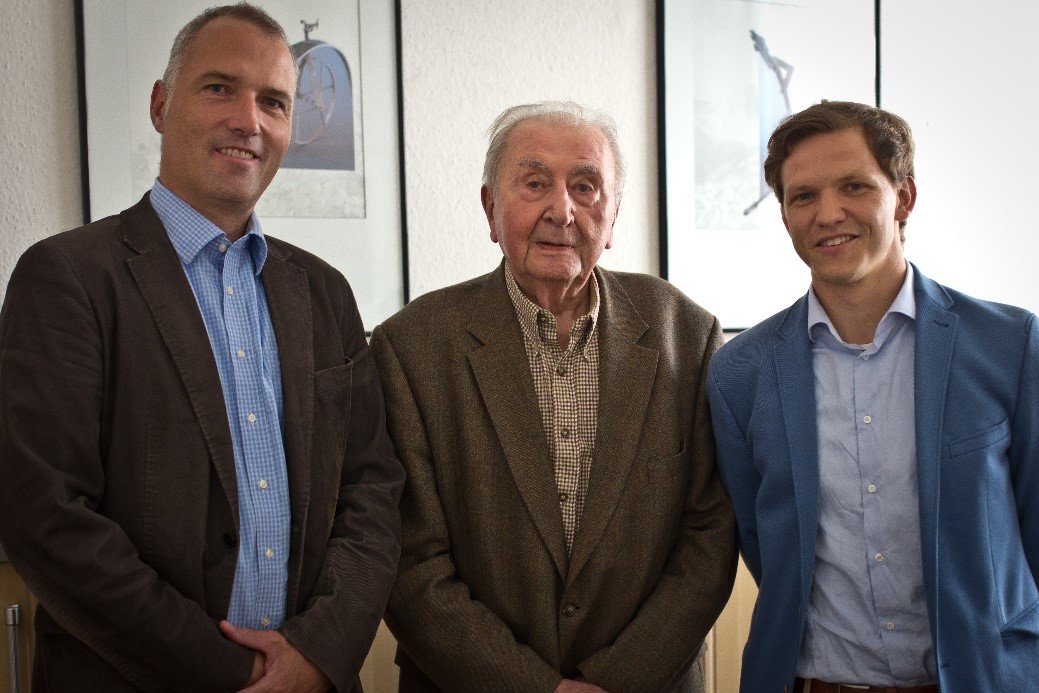
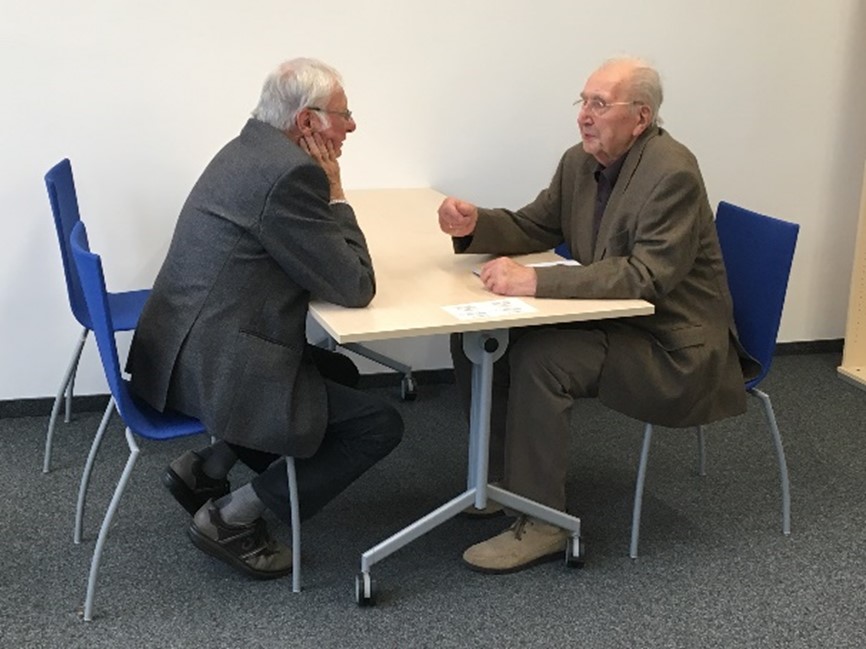
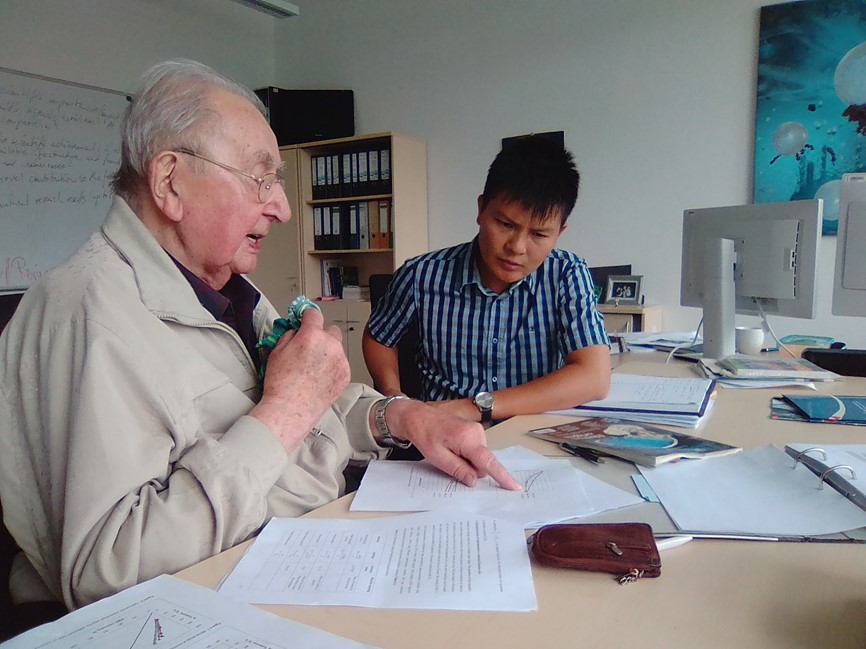
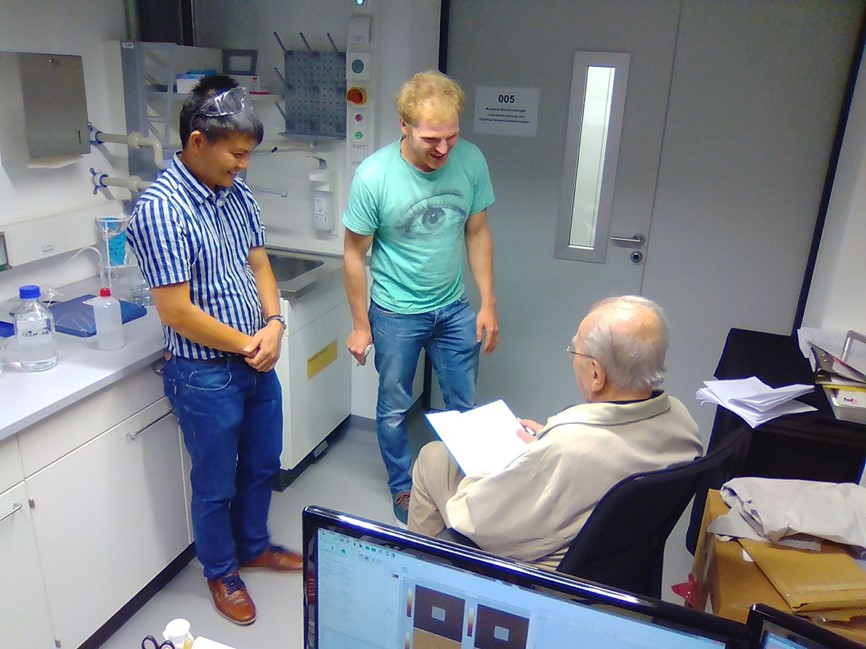
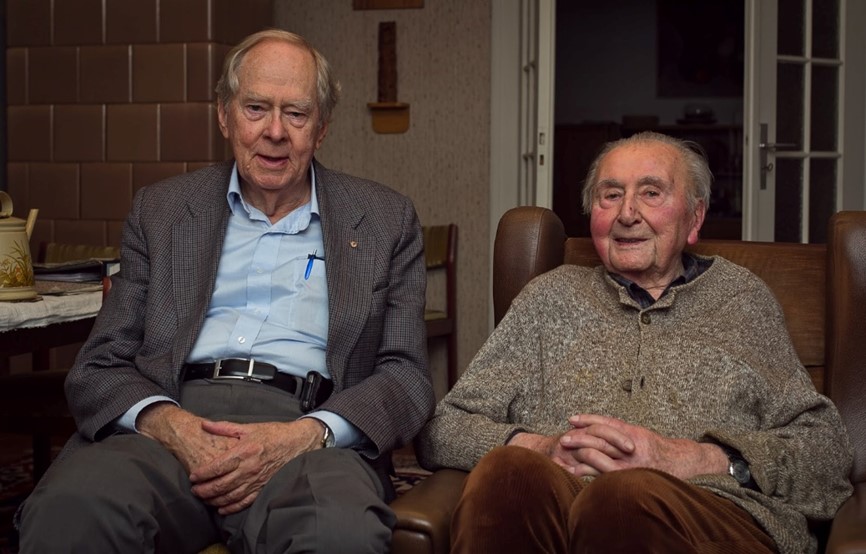
The series of images shows several photographs of Heinrich Schubert, some of which had not previously been published online, from the collection of the Institute of MVTAT and the university, depicting him as many colleagues remember him.
The comments and assessments from experts on the occasion of his 100th birthday show that Heinrich Schubert's scientific work is still relevant today and that he has earned his place in mechanical process engineering and processing technology.
Professor Anh V. Nguyen (University of Queensland, Brisbane, Australia):
“I had the privilege of knowing Prof. Schubert for many years and spent a very memorable period with him in Freiberg during my Alexander von Humboldt Fellowship (1994–1996). I still remember the many hours we spent together in his office, carefully watching many of his video footages about flotation and discussing flotation fundamentals, bubble–particle interactions, hydrophobic force, turbulence, and mineral processing phenomena. His scientific clarity, discipline, and generosity as a mentor left a lasting impression on me and strongly influenced my own work and thinking. It is an honour to have known him, and I remain deeply grateful for his guidance and friendship.”
Professor John Ralston (emeritus, University of Southern Australia, Adelaide, Australia):
“I had the great pleasure of discussing flotation science and technology with Heinrich Schubert in 1997, during one of my regular visits to the TU Bergakademie Freiberg, under the then leadership of Hans Schulze and his fine team. I was developing a strong interest in in turbulence and its role in flotation systems, an area in which Heinrich had made remarkable contributions. I found that Heinrich was very open to discussions, was generous in sharing knowledge, with a warm and caring personality. I acknowledge a very fine research engineer and a wonderful man”.
Professor Graeme Jameson (emeritus, University of Newcastle, Newcastle, Australia):
"I had the pleasure of meeting Professor Schubert on only one occasion, when I visited him in his home in Freiberg in 2017, not long before his death. Long before, I had known about his seminal work on the role of turbulence in flotation machines. I was particularly struck by an observation in his 1999 paper on turbulence-controlled micro-processes, where he remarked that particle–bubble attachment almost exclusively occurs in the zone of high energy dissipation rates, i.e.in the impeller-stream. This was a remarkably prescient remark, based on his experimental observations. In more recent years, extensive CFD modelling has confirmed Professor Schubert’s conclusion. Since the effective volume of the impeller and stator in a mechanical cell is perhaps 10 - 20% of the total cell volume, one is entitled to speculate on the function of the region outside the impeller zone. The obvious response is that most of the volume in a mechanical cell is due to the need to allow the bubbles to escape into the froth. We conclude that the residence time of a flotation feed in a mechanical cell is strongly related to the time required for the bubbles to rise into the froth, as well as the kinetics of capture of particles by bubbles! Professor Schubert was a giant in the field of flotation, helping with his colleagues at the TU Bergakademie Freiberg to lay the foundations for the study of the physics of bubble-particle interactions. His contributions to flotation fundamentals will long be remembered."
Professor Douglas Fuerstenau (emeritus, University of California Berkeley, Berkeley, USA):
"I had great respect for Professor Schubert, whom I considered to be one of the world’s major mineral processing engineers and scientists. He excelled in flotation research and found time to write an extensive three-volume mineral processing text, which I quite often referred to in my own teaching.
The first occasion at which I heard Prof. Schubert speak was the 1968 IMPC in Leningrad where he presented his research on quartz flotation chemistry, similar to what I had also worked on. At that time, unless you had pre-signed to discuss a paper, you could not participate in the discussion, and I had not registered to discuss. Our paths never crossed during that Congress, but through later years we did meet often.
In 1977, Prof. Schubert invited me to participate at Freiberg in the commemoration of the 100th anniversary of flotation. This symposium acknowledged the invention of the Bessel brothers process for graphite ore flotation. Prof. Schubert met me at Checkpoint Charlie in Berlin and we drove to Freiberg, where I stayed for several days. After the symposium, Schubert and his wife drove me to see Dresden and its museum and to the Saxony Alps where we visited the castle in which Meisen china clay was invented. After that, we regularly exchanged Christmas cards, and his depicted old etchings of Freiberg mining.
In 1982, Prof. Schubert had a travel fellowship through which he visited the U.S. and spent some days in Berkeley at the University of California, where he presented a seminar on turbulence in flotation machines and held discussions with my graduate students.
In 1984, we were living in Clausthal and with my wife and a visiting daughter, I drove to Freiberg, where we spent several days. I recall visiting the mineral processing research institute and also being guided by Schubert at the great mineral collection of the Freiberg Bergakademie. One day Schubert drove us to the Saxony Alps and its famous castle; another day he drove us to the famous Erzgebirge and several historical mining towns.
In 1991, Prof. Schubert was the Chairman of the IMPC in Dresden, and of course very busy with those duties. Being a member of the IMPC Steering Committee, however, I was present for the couple of committee meetings during the Congress. In 1997, the IMPC was held in Aachen and Schubert was there for the first two days of the Congress, but then departed early for Frankfurt where he received the major DECHMA award.
The last time that I interacted with Heinrich was at the 2006 IMPC in Istanbul, where he was the recipient of the IMPC Lifetime Achievement Award. Peggy and I had the pleasure of sitting at the same table with Heinrich at the banquet when the award was given him. At that time, he said that he was 80 years old. It is indeed a pleasure to be able to pass on to you at the age of 97 my recollections of Heinrich Schubert.
Indeed, the world is better off that Prof.-Dr. Heinrich Schubert passed through it."
Professor Roe-Hoan Yoon (emeritus, Virginia Tech, Blacksburg, USA):
“Professor Schubert’s earlier work on the flotation separation between KCl and NaCl contributed to increasing food production and minimizing starvation on a global scale. The turbulent flotation model developed during the later part of his career served as the backbone of the first-principles flotation model.”
Dr. Osvaldo Bascur (OSB Digital LLC and OSIsoft LLC, USA):
"Professor H. Schubert’s pioneering work on the effects of turbulence and hydrodynamics in the flotation process was foundational to the development of our dynamic flotation model based on first principles. His insights established the critical role of turbulence in flotation, not only for understanding fundamental mechanisms but also for the design of process equipment and the optimization of industrial operations.
I had the honor of meeting Professor Schubert at the University of Utah, where we discussed his research and its application to my doctoral thesis in 1982. His work directly inspired the development of a precise methodology to measure turbulence in flotation cells, enabling the characterization of bubble generation, air holdup, and the attachment and detachment sub-processes. After his visit to the USA i had the privilege to continue exchanges ideas with him in many conferences we attended over the years. The Kolmogorov theory is vital to understanding bubble generation, attachment and detachment subprocesses which combined with the dynamic continuity equations to model de pulp and froth air holdups provide our Dynamic Model of Flotation from an hydrodynamic operational perspective. These concepts are proving to be a great contribution to optimize industrial flotation circuits.
As a personal gesture, Professor Schubert generously gifted me his seminal books on the fundamentals of mineral processing—works that continue to influence generations of researchers and practitioners. His scientific legacy and mentorship have left a lasting impact on the field of mineral processing and flotation science."
Professor Urs Alexander Peuker (Institute of Mechanical Process Engineering and Mineral Processing):
"I was already familiar with Heinrich Schubert before I was appointed professor at TU Bergakademie Freiberg. His three-volume textbook on processing technology and his handbook on particle technology accompanied me throughout my scientific career, alongside the publications of the Karlsruhe School. As a young scientist at the time, I was delighted that Heinrich Schubert had cited my work in his handbook.
I only met him in person after I started working in Freiberg. Professionally, we gave each other space. As head of the institute, it was a matter of course for me that Professor Schubert had a permanent right to his emeritus office and to continue his scientific work at the TU Bergakademie Freiberg. Through his last doctoral student, Dr Huu Duong Hoang, whom I was happy to take over from him after 2017, we also came to publish a joint paper.
Our personal meetings are limited to conference visits and alumni events organised by the institute. Here, we exchanged ideas less on a professional level and more on a personal and historical level.
Looking at Heinrich Schubert's research from the perspective of current issues in particle technology and mineral processing, it is clear that Heinrich Schubert was already addressing modern and forward-looking topics more than 60 years ago and made essential contributions to the scientific development of our field. Although we now have newer and more detailed measurement methods and much greater capabilities for performing simulation calculations, our understanding of the mechanisms and microprocesses continues to be based heavily on the work of Heinrich Schubert. He laid many of the foundations that still underpin the conceptual framework of particle technology today. And I am always delighted when I refer back to his contributions in my lectures, so that we can convey to today's students that Freiberg has been an important part of research into mineral processing, recycling and mechanical process engineering for generations."
Professor Jens Gutzmer (Helmholtz Institute Freiberg for Resource Technology):
„Heinrich Schubert was one of the first academics from then Eastern Germany that I got to know and respect during my study years in West Germany. Whilst majoring in mineralogy and economic geology at the TU Clausthal in the late 1980s, I developed a keen interest in minerals processing. Searching the university library for suitable literature on this subject led me very quickly to the three volumes “Aufbereitung fester mineralischer Rohstoffe” - authored by Heinrich Schubert in the early 1970s. These volumes quickly became my “go-to” whenever trying to understand mineral processing technologies. I still find the volumes, copies of which I now have in my office, exceptionally well written and very helpful. More than two decades later Heinrich Schubert and I met in person. This was as a result of the establishment of the Helmholtz Institute Freiberg for Resource Technology. Although the discussions we had were only brief, they were more than sufficient to re-affirm my respect for him as an excellent engineer and colleague, always equipped with a sharp mind and a clear language.“
Dr. Simone Raatz (Helmholtz Institute Freiberg for Resource Technology):
"I met Prof. Heinrich Schubert when I was looking for a doctoral supervisor as an external doctoral candidate at TUBAF. Since my doctoral thesis dealt with the flotation of calcium-containing minerals, my path led me straight to him, a man who was slightly intimidating with his height, voice, and presence. However, he readily agreed to be my external supervisor without any hesitation. I was very happy about this, but it didn't make things easy for me. The scientific discussions were tough. It was essential to read and understand the three-volume book series he wrote, “Aufbereitung fester mineralischer Rohstoffe” (Processing of Solid Mineral Raw Materials). As a chemist, however, the content was not always self-explanatory to me, and our exchanges of ideas were often challenging and time-consuming. But in the end, I achieved my goal, and the many discussions helped me grow both scientifically and as a person. Prof. Schubert deserves a big thanks for that. I remember him with great respect."
Dr. Martin Rudolph (Helmholtz Institute Freiberg for Resource Technology):
"I had the honor of co-supervising Professor Heinrich Schubert’s final doctoral student, Dr.-Ing. Duong Huu Hoang, alongside him from 2013 until his passing in 2018. Our regular meetings first took place in his office in the Karl-Kegel-Bau at TU Bergakademie Freiberg, and eventually at his home. For my colleagues and me, it was always a special moment to see the 'great Prof. Schubert' driving into the courtyard, even well into his 80s. He was a truly impressive personality with a wealth of stories to share. Both Duong and I learned an immense amount from him. What was particularly striking was his ability to provide not only the right answer to any question but also the exact references, all while challenging us with insightful questions of his own. In our final conversations, he repeatedly emphasized how grateful he was for such a long and fulfilled life. I have also heard many stories from colleagues around the world about their encounters with Prof. Schubert; they all speak of his tireless interest in mineral processing and mechanical process engineering, and his willingness to always take the time for scientific discussion. I am deeply grateful to Prof. Schubert for sharing his time and wisdom with us, and for both challenging and supporting us throughout our journey."
additional info
Heinrich Schubert passed away on April 9, 2018, at the age of 92 in Freiberg. A very nice obituary for Heinrich Schubert in German and English can be found in the magazine AT Mineral Processing, which summarizes his work and his significance for the field of mechanical process engineering and mineral processing technology.

obituary in AT Minerals
Heinrich Schubert was also remembered on Barry Wills' MEI blog following his death.

obituary on Barry Wills' blog
An online book of condolences also contains some interesting personal memories from various companions of Heinrich Schubert.