Project 5050 – embarking on a cross-disciplinary Ukrainian-German learning experience
Building on the experience gained and with the participation of researchers and faculty members from TUBAF and Dnipro National Technical University who contributed to the recently completed TUBAFdigital project EdUp, a follow-up Project 5050 is now underway: It is an experimental, multidisciplinary learning format that brings together faculty and students from the fields of geosciences, history and marketing. During the project, students conduct research on the shared history of Dnipro National Technical University and the Technical University Bergakademie Freiberg.
This partnership developed particularly strongly in the field of geosciences: It is documented that this began around 130 years ago, when professors from Freiberg participated in the geoscientific exploration of iron ores and the establishment of mining companies in the Dnipro region. Today’s DniproTech was founded as a higher mining school in 1899. Even back then, there was a lively exchange, with students from Dnipro coming to the TU Bergakademie Freiberg for courses. In 1904, the future professor Joseph Tanatar was one of the first graduates of the Dnipro Mining School. He, too, went to Germany to pursue a doctorate, first to Freiberg and later to Munich. Back in Ukraine, he founded influential scientific institutions dedicated to the research of iron ores, uranium, and other metals, whose offshoots and successor institutions still exist today.
Having nearly fallen into oblivion, these long-standing connections are now being revived in a new form: After teachers from both universities worked closely together last year to develop joint hybrid courses, (LINK EDUP), they have now decided to embark on a multidisciplinary ‘cross-over’ teaching project. The instructors are experts from the fields of geosciences, marketing and journalism, history, and academic/technical English.
Two study formats are combined for optimum project results: A Collaborative Online International Learning phase (COIL), extended by a Blended Intensive Programme (BIP). This means that most of the work takes place online, while selected teachers and students from DniproTech visit TU Bergakademie Freiberg in person to carry out specific tasks.
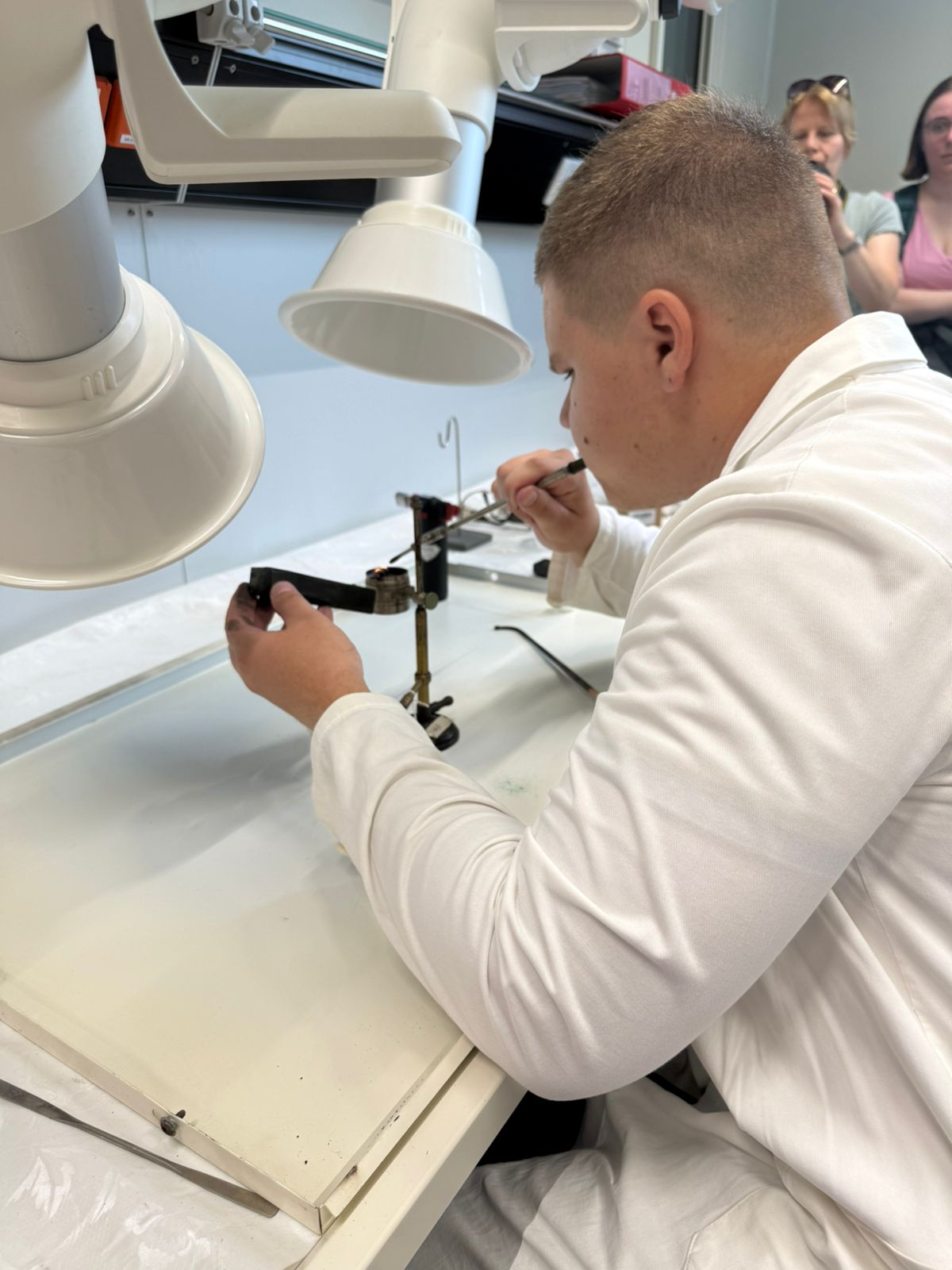
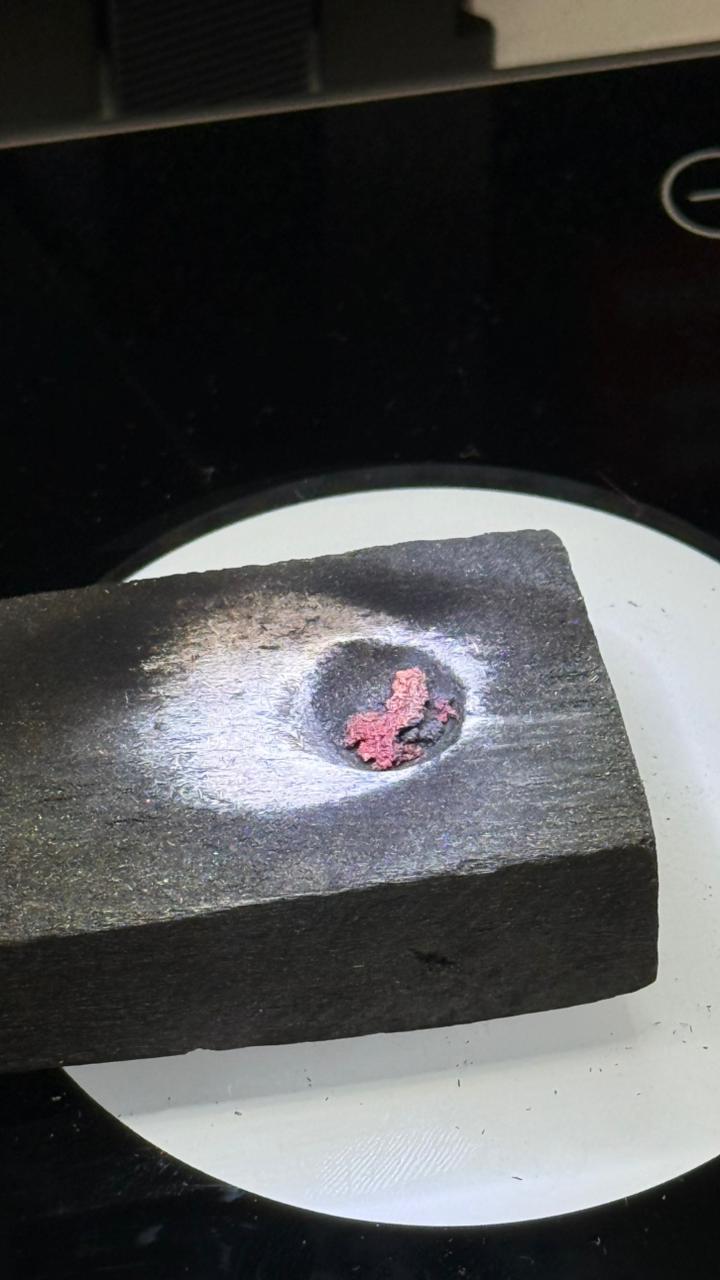
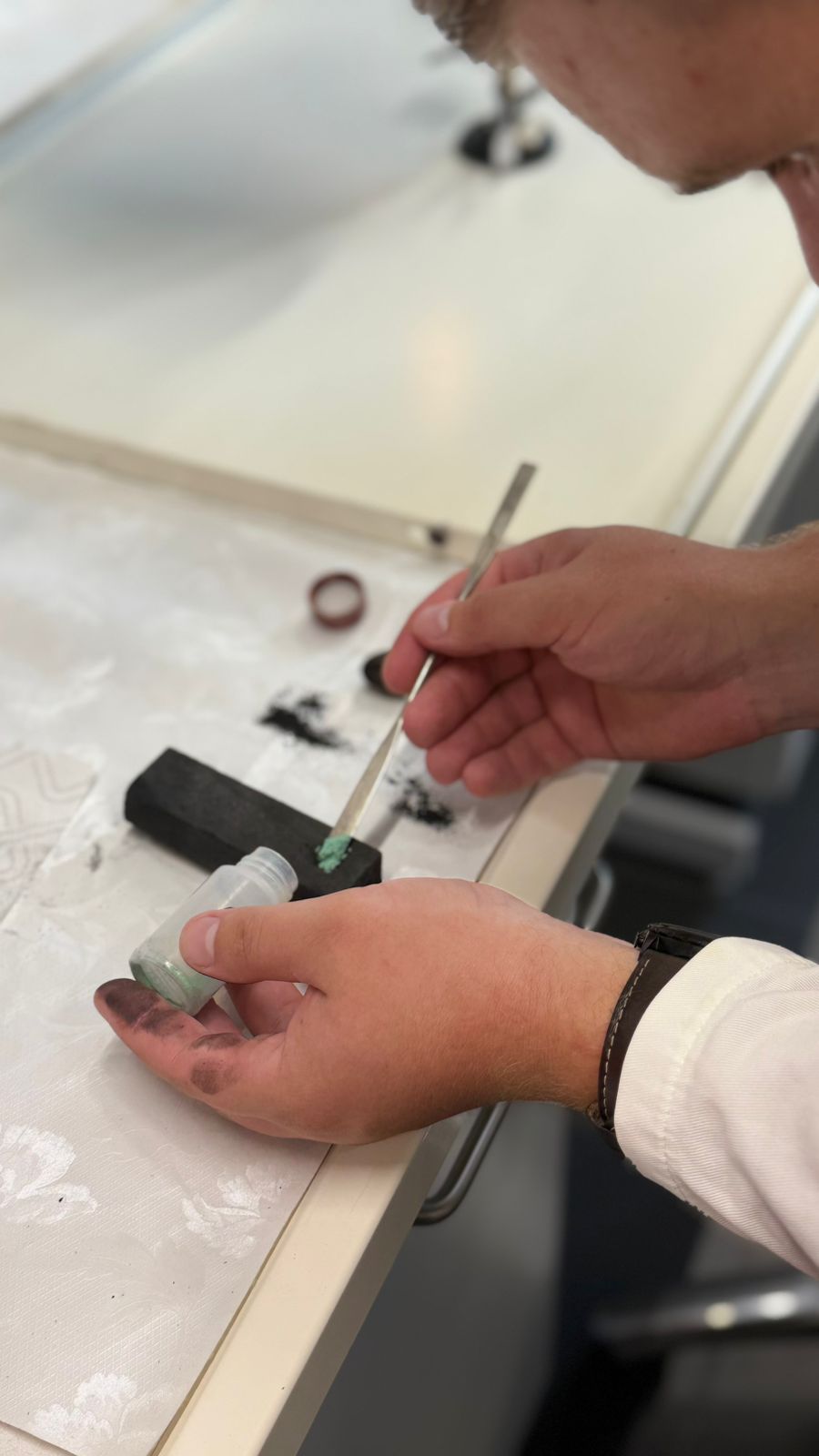
On April 16, 2026, the project was launched with a hybrid kick-off meeting attended by all participating faculty and students. Over the next seven weeks, they will work on various aspects of the project within the framework of four work packages: researching the scientific legacy of Joseph Tanatar, archival science and the digitization of archival records, the “blowpipe” method, and the development of a dissemination strategy and an exhibition that summarizes all the results and presents them to the public. Thereby, we aim to highlight and celebrate the longstanding partnership between Freiberg and Dnipro.
At TUBAF, the course is embedded into a technical English module, underscoring the goal of using English classes not just to learn a language but to make international connections with English as a Lingua Franca: As such, Project 5050 is part of COIL-Eng, a StIL Freiraum 2026 Project that aims to use COILs to strengthen collaborations and internationalization within TUBAF itself, as well as with its partner universities. TUBAFdigital supports the project in terms of content and organization in the development of the results and the organization of the exhibition, as well as in organizing study visits to Freiberg for the participating Ukrainian students and researchers.
Project Timeline
| April 16, 2026 - Kick-off | The students were introduced to the goals and tasks of their work packages. They got to know the work package leaders and their team members. The work package teams gathered in breakout rooms for a first briefing. Task 1: Upload an AI created picture of the team together with the prompts |
| April 23, 2026 - Group Norming | The students met up online and discussed how they will collaborate. Task 2: Team charter with collaboration details, roles and goals. |
| April 30, 2026 - Peer Presenting and Consulting | The meeting began with an intercultural excercise: How do Ukrainians work, how do Germans communicate? What do we need to achieve good results in a cross-cultural project? The consensus: Personality is more important than a supposed ‘culture’. Task 3: Discuss the work package progress and prepare the interim presentations. |
| May 07, 2026 - Interim Results | The students presented their findings to date in front of the seminar group. This helped to identify outstanding issues and areas to focus on in the coming weeks. Task 4: Identify and work on open tasks and questions |
| May 21, 2026 - Final Sprint | The work packages presented their progress and discussed further open questions in breakout rooms. Task 5: Prepare for final presentations and group discussion |
| May 28, 2026 - Final Presentations and Reflection | Each working group prepares a final presentation to show results, discuss with the other students, and reflect on their experience during the last weeks. The seminar will conclude with a review of upcoming mobilities and a work plan for the exhibition. |
| Mobilities - Summer/Autumn 2026 | Phase 1: Geoscience and history students and WP 1 and 3 coordinators from DniproTech visit Freiberg in June / July for further research and object/document preparation and digitization. Phase 2: Marketing students and WP 2 coordinators from DniproTech visit Freiberg in autumn for exhibition preparation, communication/advertisement, and opening. Phase 3: Project coordinators from DniproTech visit Freiberg in autumn for the opening of the exhibition. |
| Exhibition - November 2026 | The results of the seminar project will be showcased in an exhibition. In doing so, the students will present not only their own research findings and historical artefacts from Dnipro and Freiberg, but also the historical context of the collaboration between the two universities, as well as the process of their own collaboration. |

On-site Work Phases
In the coming months, we look forward to welcoming student groups and work package leaders to Freiberg. The results of the BIP (Blended Intensive Programme) 5050 will be compiled and refined over several phases of work. In late fall, an exhibition showcasing the project results and the ongoing, vibrant partnership between Dnipro University of Technology and TU Bergakademie Freiberg will be officially opened. More information will be posted here.
Work Phase 1 - Scientific Heritage and Blowpipe Method
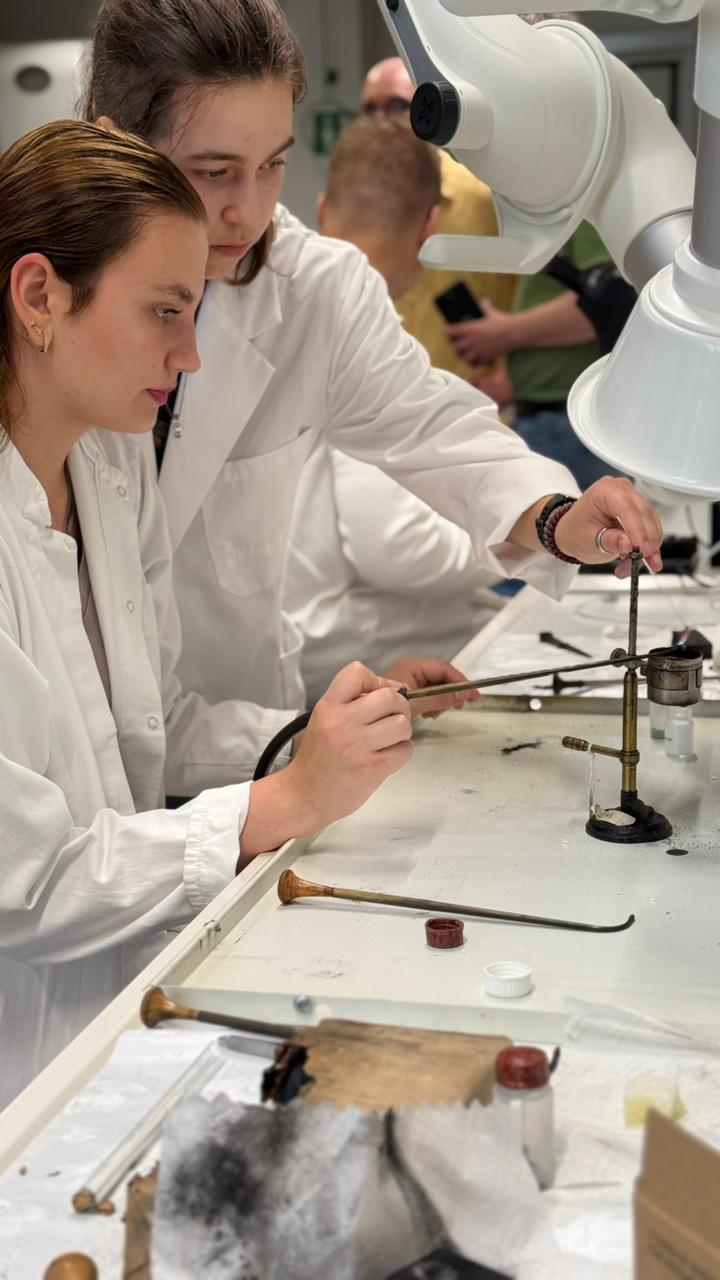
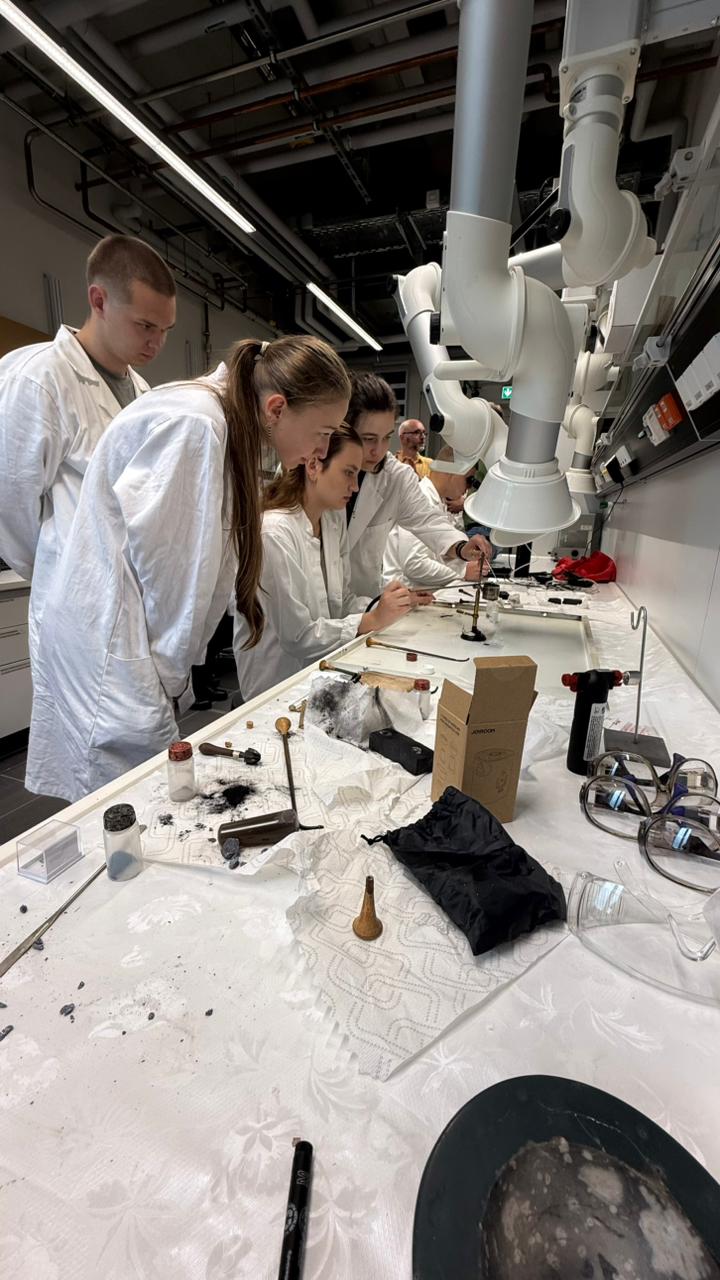
From June 29 to July 10, 2026, we warmly welcome the project’s first working group. Students and faculty members from the geosciences department will travel to Freiberg. They’ll take part in an extensive program that includes visiting highlights of geology and mining, getting to know the labs, participating in intercultural and language workshops—and, last but not least, working together with their fellow students from TUF on practical testing of the blowpipe method and the design of their exhibition content.
Kontakt
Projektkoordination an der TUBAF erfolgt durch das IUZ/Sprachen (Darlene Ann Kilian und Dr. Mark Jacob) und TUBAFdigital (Lena Bussmann Fuentes, +49 3731 39 2664, lena [dot] bussmann-fuentes [at] zuv [dot] tu-freiberg [dot] de)