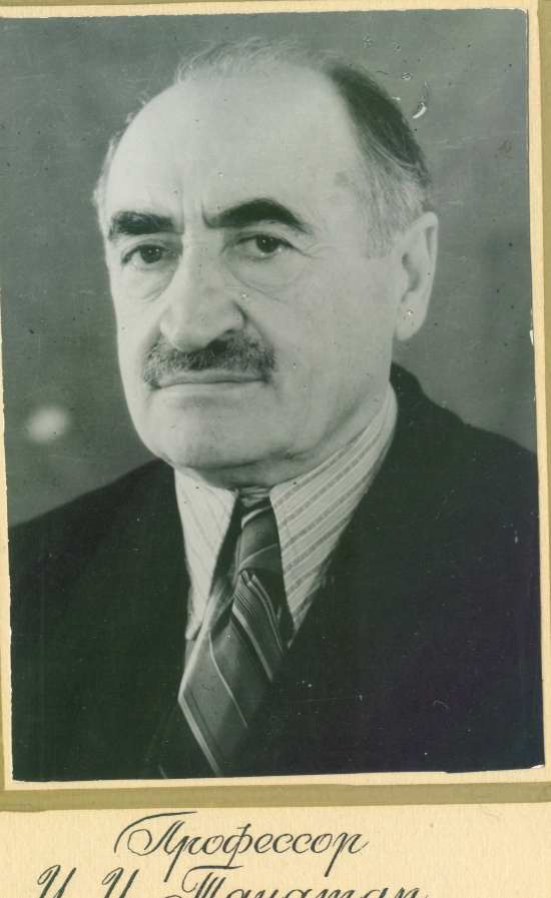
Joseph Tanatar lived and worked at the turn of the century. He visited Freiberg between 1904 and 1905. As part of this module, students will search for clues in the archives of TUBAF and Dnipro University of Technology, unearthing historical treasures that will help to trace his life and work.

Student Work During the Project
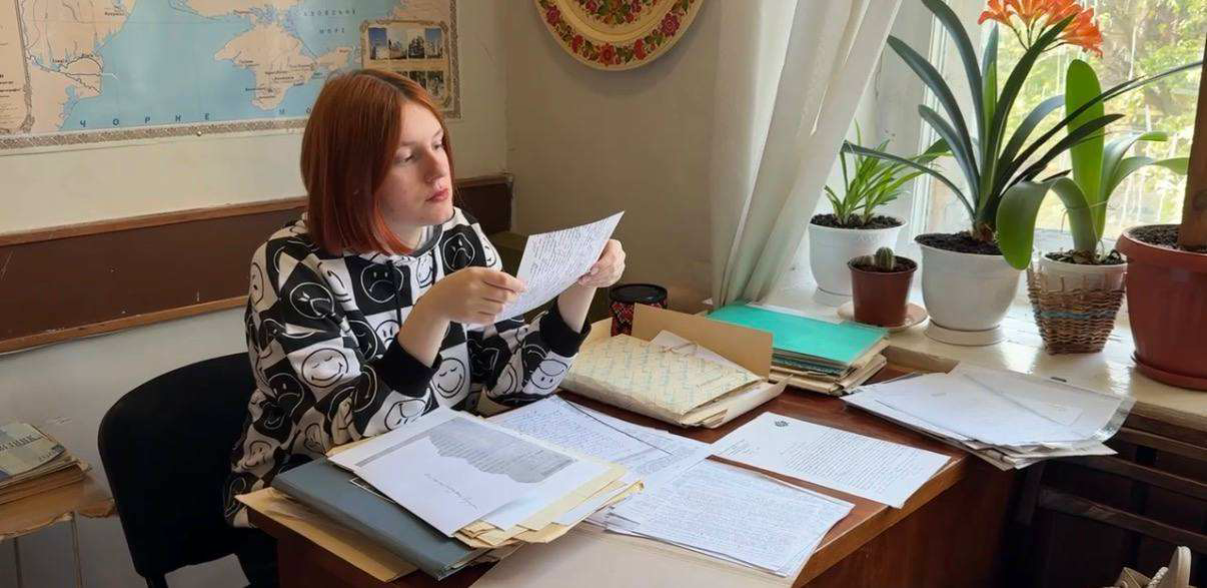
During the project, the student team conducted archival research and
- Visited archives
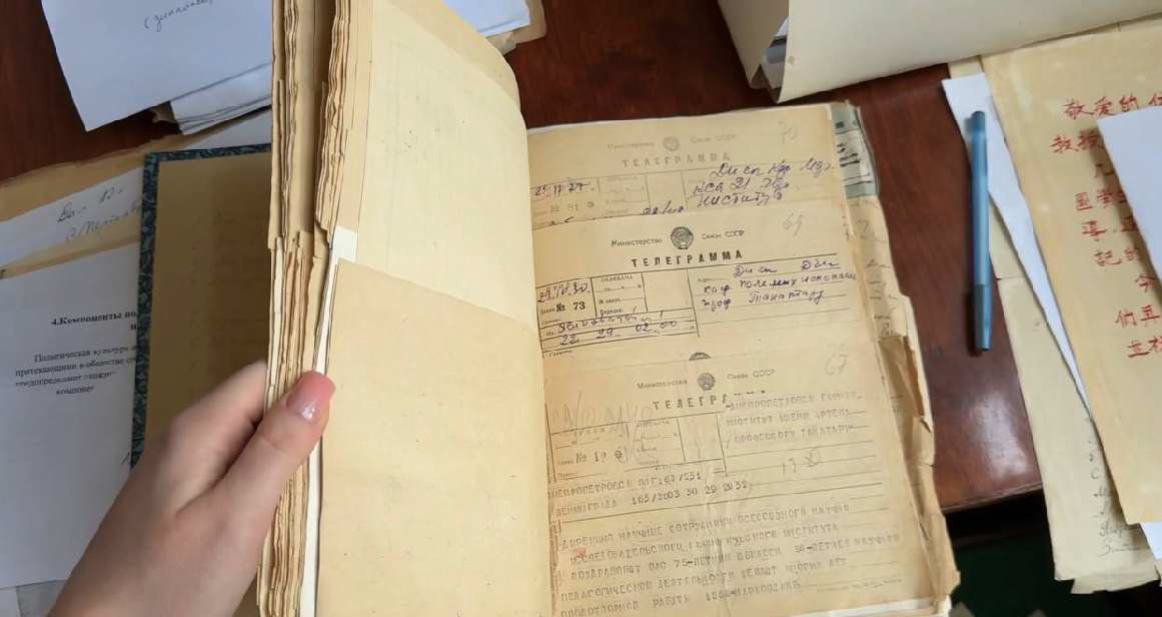
- Worked with historical documents (reviewed around 5 large folders)
- Studied articles and scientific materials
- Analyzed photographs
- Compared data from different sources
After selecting the documents and articles, we focused on their digitisation. We scanned documents using a special application or the built-in camera function on our phones.

Collected Archive Mateiral
- Numerous articles and newspapers about
Tanatar’s biography - A detailed article of more than 15 pages
- His 5-page autobiography
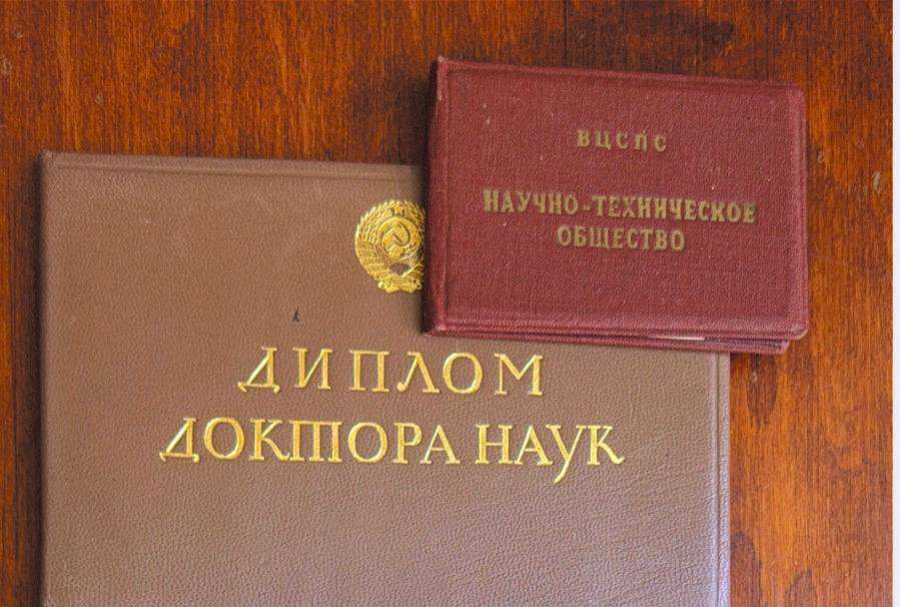
- Qualification and employment documents
- Diplomas
- Certificates and awards
- Reviews and academic feedback on his
scientific works - Postcards and letters from the University of Munich
Academic Path and Freiberg Connection
The students found that Joseph Tanatar, born in Melitopol (Oblast Zaporizhzhia, Ukraine) was one of the first students of theYekaterinoslav Higher Mining School and belonged to the first graduating class. After graduating in 1903, he remained at the Department of Mineralogy as an assistant to Prof. A.V. Lavrsky and began advanced studies in petrography.
In 1905, he was sent to the Freiberg Mining Academy for further training in mineralogy, petrography, ore deposits.
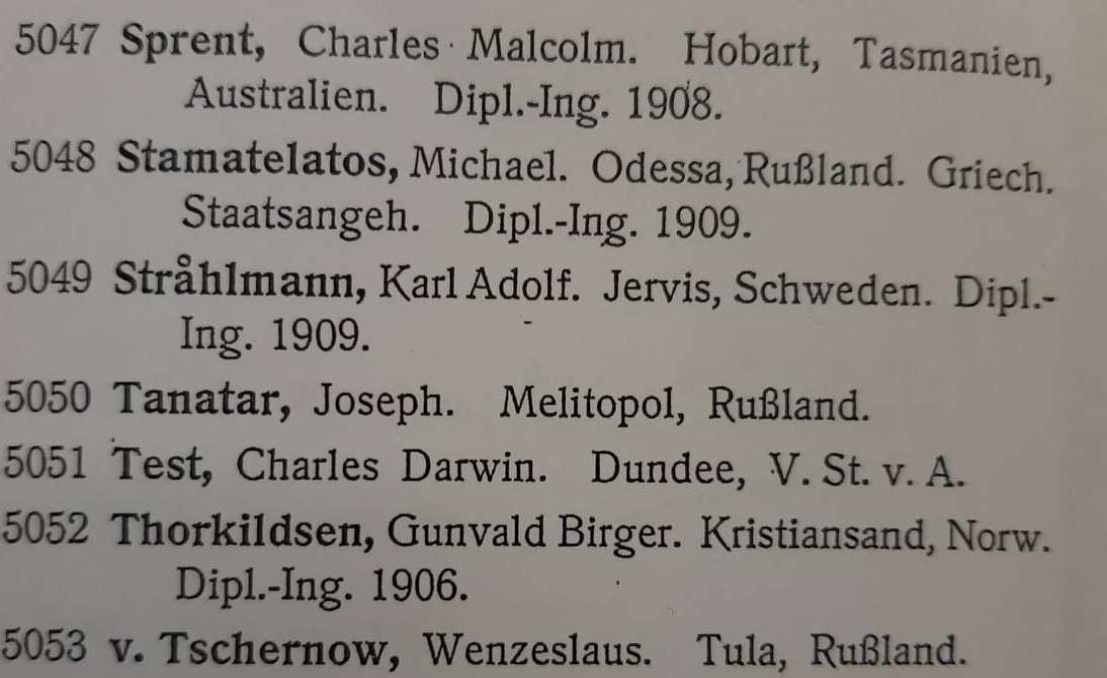
This also explains where the name of the COIL project comes from: At TUBAF, Tanatar was registered under the number 5050!
Unfortunately, many documents attesting to Tanatar’s presence are missing from the TUBAF archives. However, based on records of students enrolled at the time, it is possible to make some educated guesses and partially reconstruct his time at what was then the “Royal Saxon Mining Academy” in Freiberg. For example, he likely studied under professors Friedrich L. W. Kolbeck, Carl R. Beck, and Otto Stutzer; among other subjects, they taught mineralogy and crystallography, the blowpipe method, as well as general economic geology and rock microscopy.
While analyzing different sources, the students noticed that his studies in Germany had a strong influence on his later scientific activity.
After returning:
- He participated in translating a section on “Petrography” from the book 'Elements of Geology' from German
- Helped introduce new methods of mineral research
- Established a blowpipe laboratory
- Brought 277 mineral and rock samples
It is therefore probably safe to conclude that the knowledge Tanatar gained in Germany later influenced his own academic path, and also the development of geological education in Ukraine.